Waterjet Dictionary

What is it?
Why does it matter?
When would I use it?
What does it mean for my production?

Abrasive Waterjet (AWJ)

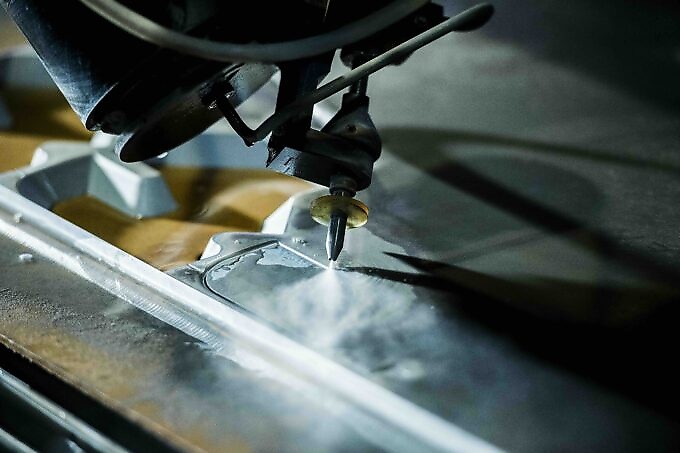
A cutting process where high-pressure water is mixed with abrasive to cut through hard materials. It can cut almost any material without heat-affected zones, thermal distortion or changes to the material structure.

You use it when you need to cut hard, thick, heat-sensitive or difficult-to-machine materials like metals, composites, glass and ceramics etc. — or when flexibility and material integrity are important.

For production it means greater material flexibility, fewer secondary operations and the ability to produce complex parts accurately while keeping the material’s original properties intact.

Pure Waterjet (PWJ)

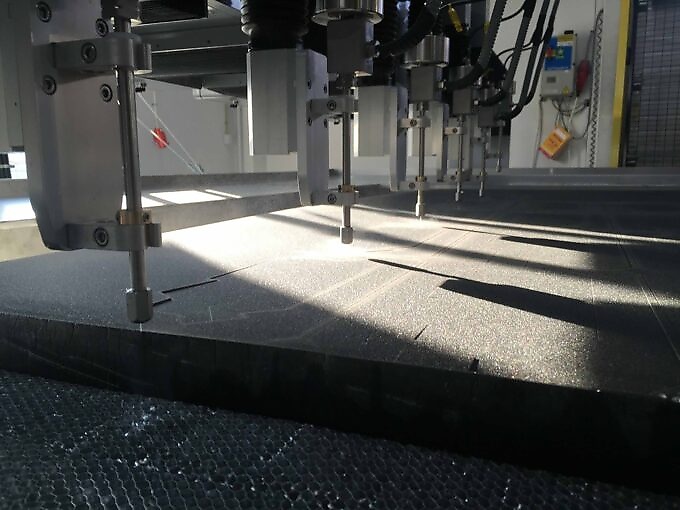
A water only application using only ultra-high pressurized water to process soft materials like foam, rubber, plastic, veneer etc.

It provides a clean, cold cutting process with no heat-affected zone, making it ideal for materials that can be damaged by heat.

You use it for cutting soft or flexible materials such as rubber, foam, plastics, insulation, textiles, gaskets, food products and composites.

For your production it is a clean,
precise cutting with minimal material stress and no abrasive handling. It can reduce secondary finishing and is well suited to fast, flexible production of complex shapes.

Fine Abrasive Waterjet (FAWJ)

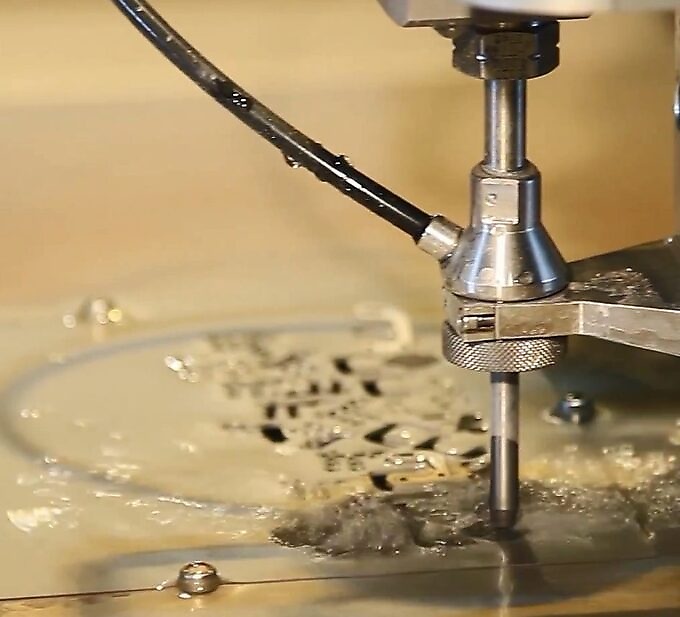
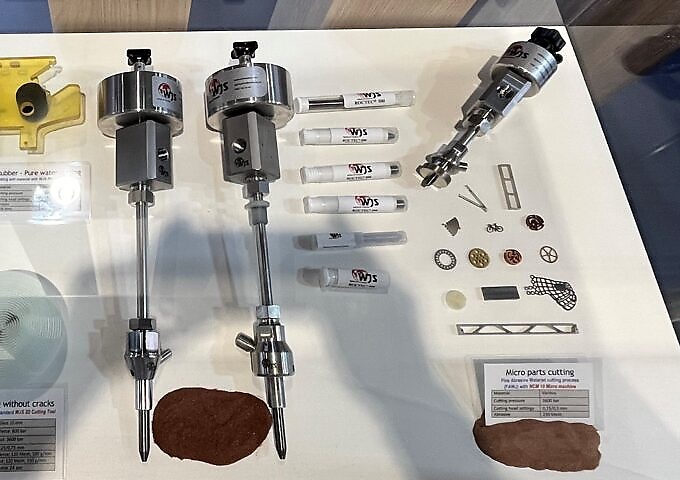
Also called micro cutting. Similar to AWJ (abrasive waterjet cutting) but with a thin incision between 0.2-0,5 mm. Fine abrasive waterjet is used for cutting fine parts in hard materials instead of using EDM technology.

Abrasive Mesh Size

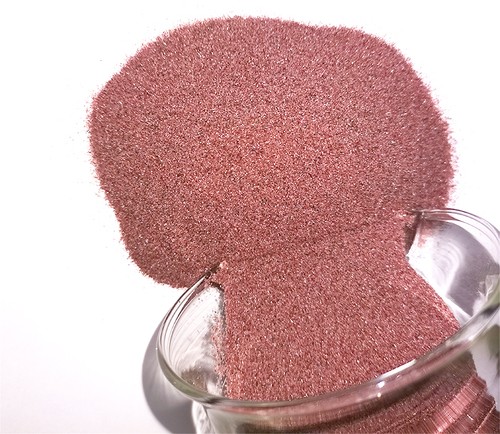
Abrasive mesh size refers to the grain size of the abrasive particles used in abrasive waterjet cutting. The mesh number indicates the particle size: a higher mesh number means finer abrasive particles.

The abrasive grain size affects cutting speed, edge quality, surface finish, and abrasive consumption. The right balance depends on the material, thickness, and required cutting result. Different mesh sizes are suited to different applications. Coarser abrasives can provide efficient cutting in demanding applications, while finer abrasives can be useful when a smoother edge or more detailed cutting is required.

Choosing the right abrasive mesh size helps you balance cutting speed, edge quality, precision, and operating cost. For abrasive waterjet cutting I normally ranges from 80 to 120 mesh, and fine abrasive waterjet cutting use 230-240 mesh.

Control System

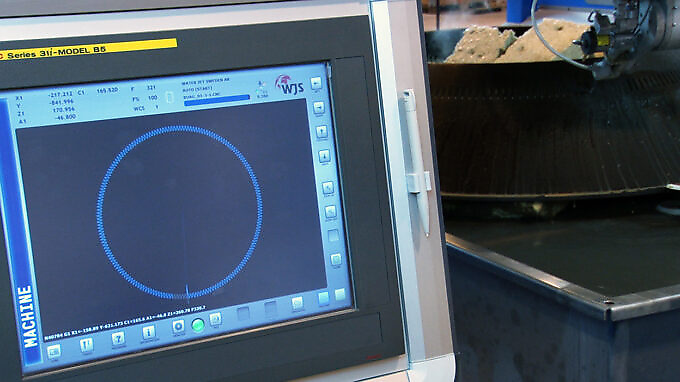
The waterjet control system is the machine’s central interface for operating, monitoring and controlling the cutting process. It connects the CNC motion system, cutting heads, pumps, abrasive delivery and other machine functions, allowing the operator to set up jobs, run programs and monitor production.

A capable control system makes the machine easier to operate, more predictable and more productive. Intuitive controls, clear information and automated functions can reduce setup time, minimize operator errors and make complex cutting operations easier to manage.


A well-designed control system can help you reduce setup and operator time, improve process consistency, and make better use of the machine’s capabilities. It gives operators the information and control they need to keep production running efficiently, while advanced automation can simplify demanding tasks and reduce the risk of errors.

Every time you operate the waterjet — from preparing and positioning a cutting job to starting production, adjusting parameters, and monitoring the machine. Advanced functions become particularly valuable when working with complex geometries, multiple cutting heads, 3D cutting, or large programs.

Water Jet Sweden use FANUC CNC for our machines, having the highest reliability and availability in the world.

Panel One

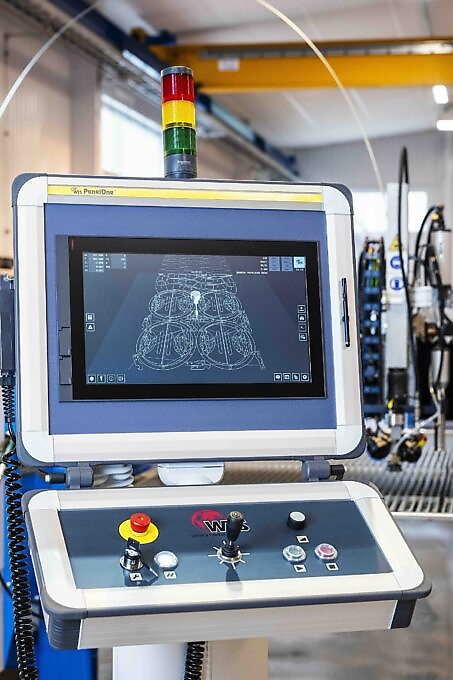
PanelOne® is Water Jet Sweden’s machine control interface, designed to give operators intuitive control over the waterjet cutting system. It brings machine operation, job preparation, cutting functions, monitoring and maintenance information together in one clear interface.

A waterjet is only as effective as the way it can be operated. PanelOne® makes machine functions easier to access and understand, helping operators work efficiently while taking advantage of the machine’s capabilities.

Every time you operate the machine. Use PanelOne® to prepare and run cutting jobs, position the machine, manage tools and cutting heads, monitor production and access machine and maintenance functions. Advanced features are particularly useful for complex jobs, large programs, multi-head cutting and 3D applications.

PanelOne® means simpler operation, greater control and more efficient production. PanelOne® helps reduce unnecessary operator steps, provides clearer information during production, and makes advanced machine functions easier to use. The result is a more streamlined workflow and a control system that can grow with your waterjet system.

Intensifier Pump

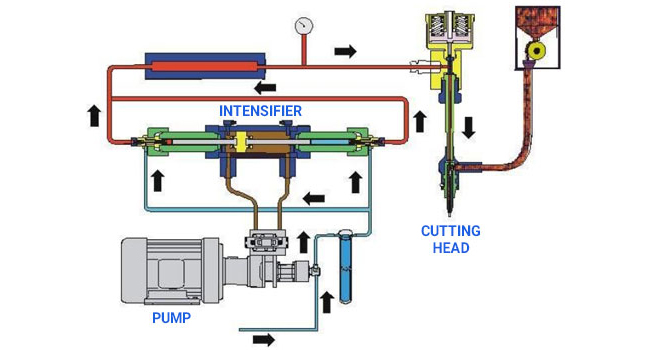
An intensifier pump generates the ultra-high-pressure water used for waterjet cutting. It uses hydraulic pressure to amplify tap water to pressures of several thousand bar.

The pump is the heart of the waterjet system. Its pressure, flow, efficiency, and reliability directly affect cutting performance, operating costs, and machine uptime. A well-matched pump provides the pressure and water flow needed to achieve the required cutting speed and quality.

An intensifier gives reliable, consistent cutting performance and can offer robust high-pressure performance and is well suited to demanding industrial applications.

Crankshaft Pump

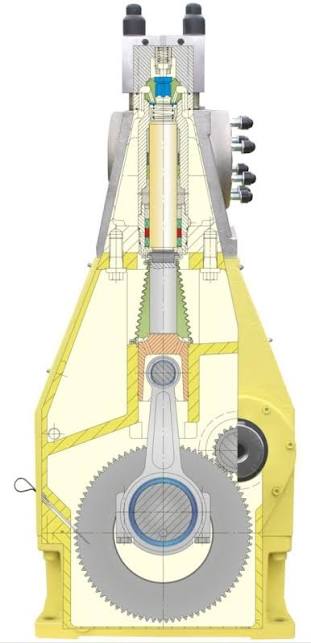
A Crankshaft Pump (direct driven pump) generates the high-pressure water used for waterjet cutting by mechanically driving high-pressure plungers directly from an electric motor, rather than using a separate hydraulic system to amplify the pressure. The pump delivers a continuous flow of high-pressure water to the cutting head.

The pump is a key part of the waterjet system and directly affects cutting performance, energy consumption, maintenance and operating costs. Direct drive technology can provide an efficient and compact way of generating high-pressure water, with fewer intermediate components between the motor and the pump.

Direct drive pumps are used for continuous waterjet cutting, including both pure and abrasive waterjet applications. They can be particularly suitable where consistent water flow, compact design, and energy efficiency are important considerations.

A direct drive pump can provide a more continuous flow and may offer efficiency advantages in certain applications. The right choice is the one that matches your production requirements, rather than simply choosing the highest pressure.

Ultra-High Pressure

Ultra-High Pressure (UHP) in waterjet cutting refers to water pressurized to several thousand bar before it is forced through a tiny orifice to create an extremely fast, concentrated cutting jet. Modern systems can operate at pressures of 6,000 bar (87,000 psi) and above.

Higher pressure can increase the energy density of the waterjet, allowing the jet to cut faster and penetrate thicker materials. It can also make it possible to achieve higher productivity with a smaller cutting stream and, in some applications, lower abrasive consumption per cut.

UHP is necessary for a waterjet to be able to cut, normally ranging from 3000 bar to 6000 bar. Higher pressure gives high cutting speeds, increased cutting capacity, or efficient processing of thick and difficult-to-cut materials.


Beveljet 60

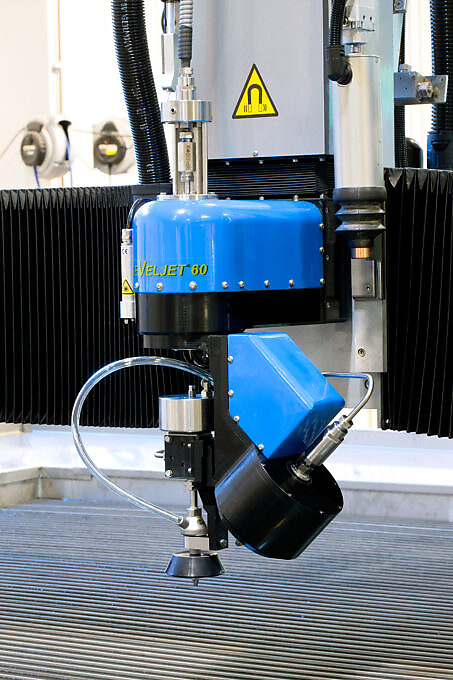
Beveljet 60 is a 5-axis waterjet cutting head that can tilt the cutting jet up to 60° from the vertical. It compensates for the natural taper of the waterjet and allows the machine to produce angled cuts and true 3D geometries.

It gives a waterjet system the ability to go beyond conventional 2D cutting. Beveljet 60 can produce accurate bevels and complex angled geometries in a single cutting operation, reducing the need for secondary machining or manual finishing.

Use Beveljet 60 when you need bevelled edges, angled cuts, countersunk features or complex 3D shapes. It is particularly useful for components where the edge angle or geometry is part of the final specification, such as welded assemblies, precision components and parts requiring accurate fit-up.

Beveljet 60 can reduce secondary operations, improve part fit-up and make complex geometries possible directly on the waterjet. This can mean fewer setups, less manual finishing, and a more streamlined production flow.

Alphajet TVL

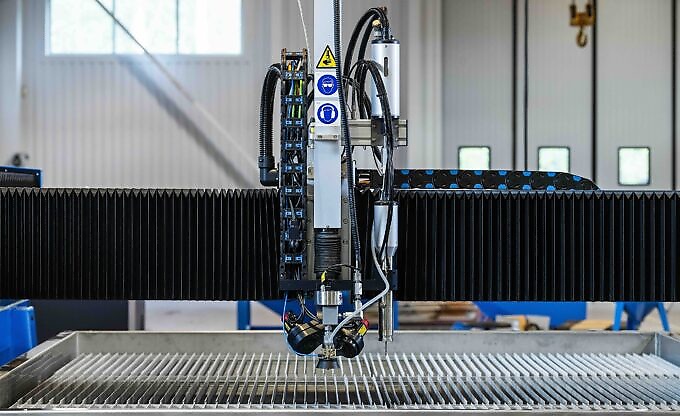
Alphajet TVL is a waterjet cutting head designed for true vertical, perpendicular cutting. It provides precise control of the cutting jet while keeping the cutting direction perpendicular to the material surface.

Perpendicular cutting is important when accuracy, repeatability and consistent edge geometry matter. By maintaining a true vertical cut, Alphajet TVL helps produce parts with predictable dimensions and clean, consistent edges across the workpiece.

Use Alphajet TVL for high-precision 2D cutting where dimensional accuracy, repeatability, and perpendicular edges are important. It is particularly useful for demanding production work where small movements and precise control are required.

Alphajet TVL can help maintain accuracy and repeatability throughout production, supporting tighter tolerances and reducing the need for secondary adjustment or finishing.

Cutting Tool

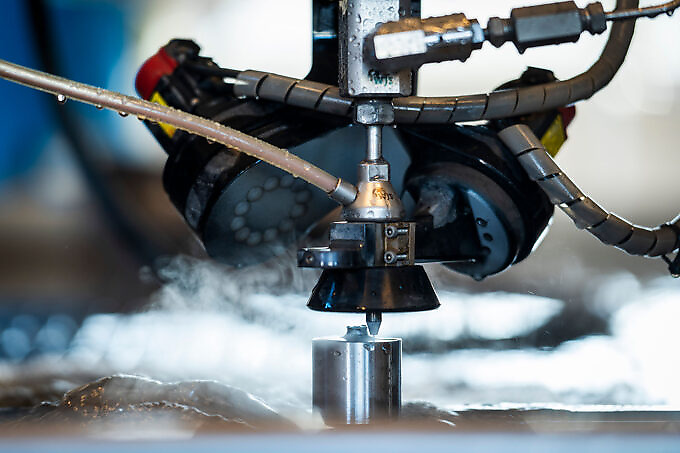
A waterjet cutting tool is the cutting assembly that turns high-pressure water into a precise cutting stream. Depending on the application, it can include the cutting head, orifice, focusing tube and abrasive delivery system. Different tools can be configured for pure water, abrasive cutting, 2D, bevel, or 3D applications.

The cutting tool has a direct influence on cutting quality, speed, accuracy, and operating cost. The right combination of components ensures that the energy from the high-pressure water is efficiently converted into a stable, precise cutting jet.

You use a waterjet cutting tool whenever you cut material with a waterjet. The configuration depends on what you are cutting, material thickness, required accuracy, cutting speed, and edge quality.

The right cutting tool helps you get more from your waterjet. A suitable tool can improve cut quality and consistency while helping optimize cutting speed and abrasive consumption. It can also allow the machine to handle different materials and applications without changing the entire cutting system.

Cutting Head

The cutting head is the part of the waterjet system where high-pressure water is transformed into a precise cutting jet. In abrasive waterjet cutting, it combines the high-pressure water with abrasive to create the cutting stream.

The cutting head has a direct impact on cutting accuracy, edge quality, speed and reliability. Its design determines how precisely the cutting jet is formed and controlled, making it one of the key components in the cutting process.
The cutting head is used whenever you cut with a waterjet. The appropriate type depends on your application.

The right cutting head helps you achieve the required accuracy and edge quality while making better use of the pump’s available pressure and the abrasive. Specialized heads can also expand what your waterjet can produce, reducing the need for secondary machining.

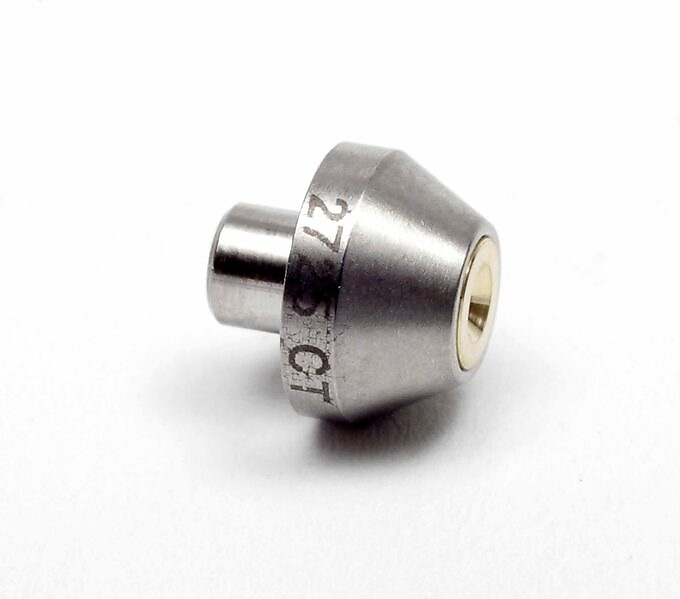
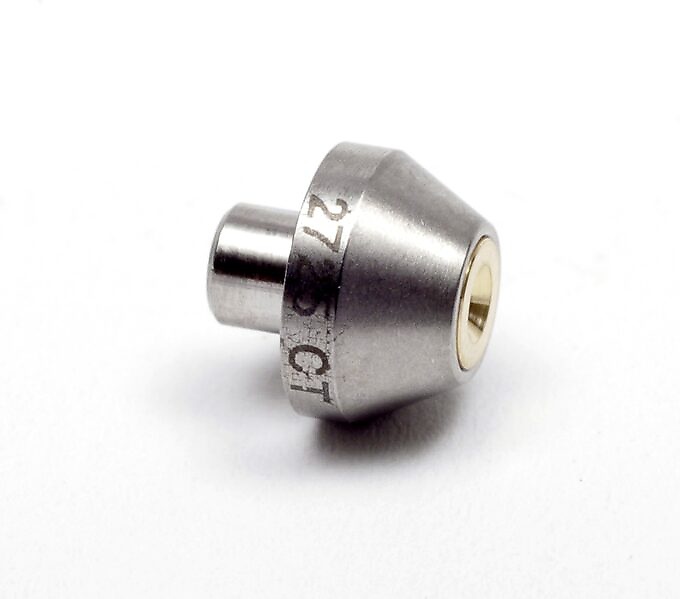
Orifice

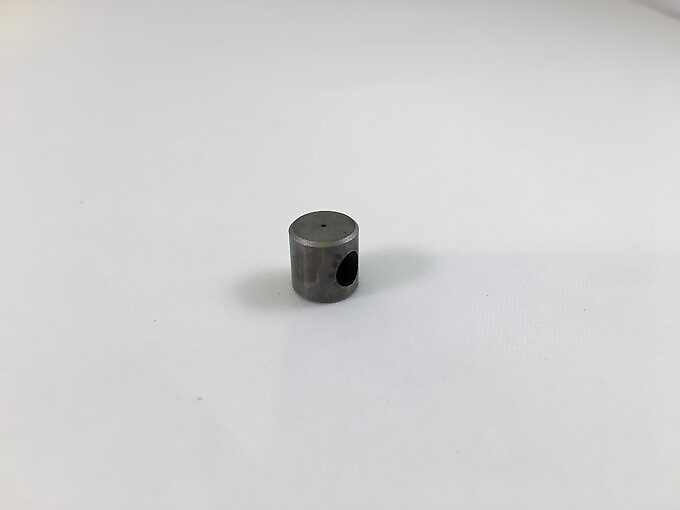
The waterjet orifice is the small precision opening through which high-pressure water exits the cutting head. It converts the high-pressure water into a high-velocity, focused jet. Orifices are available in different materials and sizes and are selected according to the waterjet system and application.

The orifice is critical to the quality and stability of the cutting jet. Its diameter, condition, and precision affect water flow, jet focus, cutting performance, and operating cost. A worn or damaged orifice can reduce cutting quality and consistency.

An orifice is used every time a waterjet cuts. The appropriate size and type depend on factors such as pump pressure, required water flow, cutting head, material, and application. The orifice is also a wear component that needs to be inspected and replaced when its performance deteriorates.

It’s a small component with a big impact. A clean, correctly sized, and well-maintained orifice helps maintain a stable cutting jet, consistent cutting quality, and predictable performance. Regular inspection and timely replacement can help avoid poor cut quality, unnecessary downtime, and wasted abrasive or material.

Jewel Orifice

A jewel orifice is a precision waterjet orifice made from a very hard gemstone material, typically sapphire, ruby or diamond. It has an extremely small, precisely manufactured opening that converts ultra-high-pressure water into a focused, high-velocity jet.

The orifice determines the shape, stability and quality of the waterjet. Jewel orifices offer excellent dimensional precision and wear resistance, helping maintain a consistent jet over time. The choice of jewel material also affects service life and operating cost.

Jewel orifices are commonly used in abrasive waterjet cutting and other applications where a stable, accurately formed waterjet is required. Sapphire and ruby are widely used for general industrial cutting, while diamond orifices can be selected when particularly long service life is important.

A high-quality jewel orifice can maintain a stable jet for extended periods, supporting consistent cutting quality and reducing the frequency of orifice changes. The right choice balances jet quality, service life, and cost per operating hour.

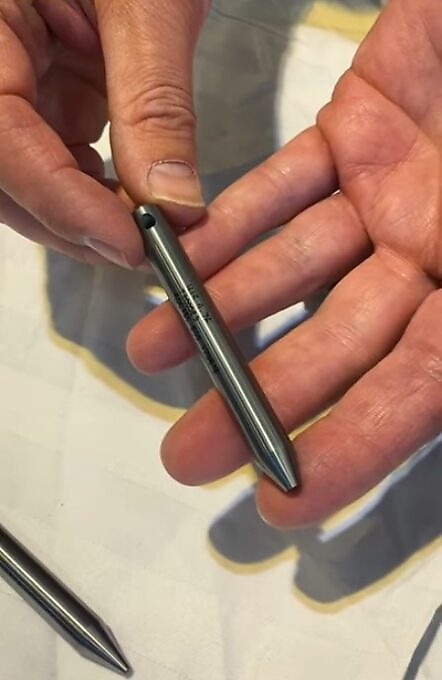
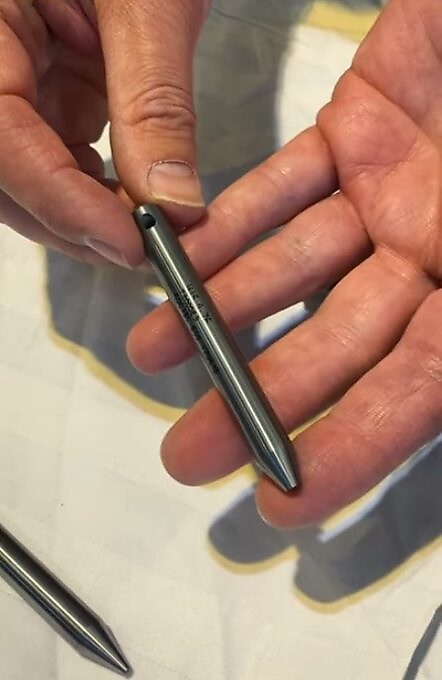
Nozzle

The waterjet nozzle, also called the focusing tube, is the component through which the high-pressure water jet—together with abrasive in abrasive waterjet cutting—is directed onto the material. It focuses and shapes the cutting stream as it exits the cutting head.

The nozzle has a direct effect on jet quality, cutting accuracy, edge quality and abrasive efficiency. Its internal diameter, length, material and condition influence how effectively the abrasive is accelerated and how stable the cutting jet remains.

A nozzle is used whenever an abrasive waterjet is cutting. Different nozzle specifications can be selected according to material, thickness, cutting speed, abrasive flow, and required precision. The nozzle is also a wear component and should be replaced when its bore becomes worn or damaged.

A properly selected and maintained nozzle helps keep your cuts accurate and consistent. A worn nozzle can cause the jet to become unstable, increasing taper and reducing cut quality. Replacing it at the right time helps maintain predictable results, efficient abrasive use, and production quality.

Focusing Tube

The Focusing Tube, also called the nozzle, is the component through which the high-pressure water jet—together with abrasive in abrasive waterjet cutting—is directed onto the material. It focuses and shapes the cutting stream as it exits the cutting head.

The focusing tube has a direct effect on jet quality, cutting accuracy, edge quality and abrasive efficiency. Its internal diameter, length, material and condition influence how effectively the abrasive is accelerated and how stable the cutting jet remains.

A focusing tube is used whenever an abrasive waterjet is cutting. Different focusing tube specifications can be selected according to material, thickness, cutting speed, abrasive flow, and required precision. The focusing tube is also a wear component and should be replaced when its bore becomes worn or damaged.

A properly selected and maintained focusing tube helps keep your cuts accurate and consistent. A worn focusing tube can cause the jet to become unstable, increasing taper and reducing cut quality. Replacing it at the right time helps maintain predictable results, efficient abrasive use, and production quality.

IDH

IDH (Integrated Diamond Head) is a waterjet cutting head designed with a diamond-based orifice integrated into the cutting head assembly. The diamond orifice forms the high-pressure water into a precise, stable cutting jet and is designed for long service life and consistent performance.

The orifice is one of the most critical wear components in a waterjet cutting head. A high-quality diamond orifice can provide excellent jet stability, long service life and consistent cutting performance, helping maintain cut quality over extended production periods.

IDH is particularly suited to industrial production where the waterjet operates for long periods and consistent cutting performance is important. It can be used for abrasive waterjet cutting when reducing orifice changes and maintenance interruptions is valuable.

More predictable production and less maintenance. The long service life of the diamond orifice can reduce the frequency of component changes and help maintain a consistent cutting jet. This can contribute to higher machine availability, more stable cut quality, and lower maintenance effort over the lifetime of the cutting head.

Jet Valve (On/Off Valve)

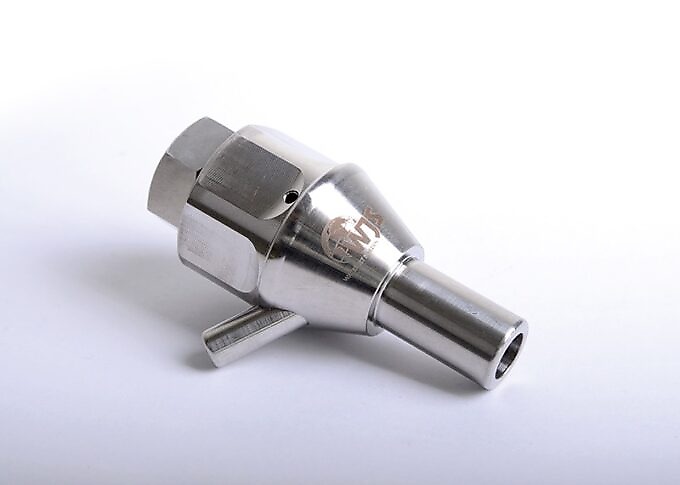
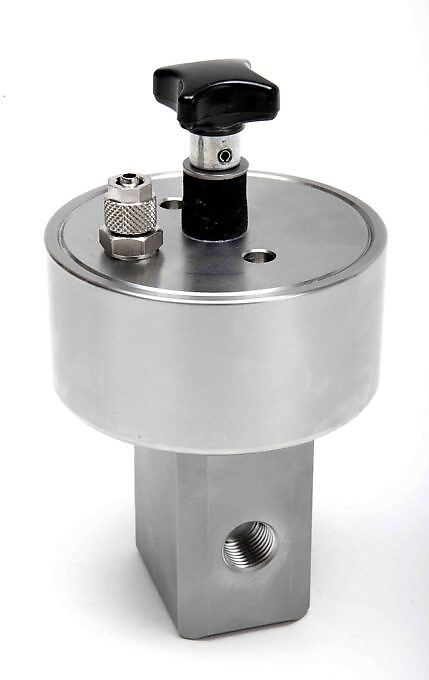
A waterjet jet valve controls the high-pressure water flow to the cutting head, allowing the operator or CNC system to start and stop the cutting jet quickly and precisely. In abrasive waterjet cutting, it can also control when abrasive is introduced into the cutting stream.

The jet valve is essential for precise cutting control and efficient operation. Fast, reliable opening and closing help synchronize the cutting jet with the programmed toolpath, reducing unwanted cutting and minimizing water and abrasive consumption.

The jet valve is used throughout the cutting process—opening when the machine needs to cut and closing during rapid movements, positioning, piercing sequences, or when a programmed cut is complete. It is particularly important in automated CNC production with many starts and stops.

Better control and less waste. A reliable jet valve helps ensure that the cutting jet is only active when needed. This can reduce unnecessary water and abrasive consumption, improve synchronization between the machine and cutting process, and help produce cleaner starts and stops with more predictable cutting results.

Short stop filter

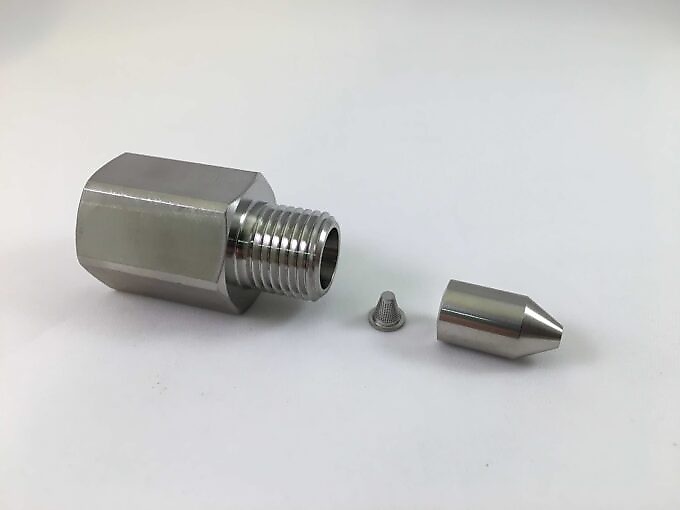
A short-stop filter is a high-pressure filtration component in a waterjet system that helps prevent particles and contaminants from reaching sensitive downstream components, such as the cutting head, orifice, and jet valve. It is designed to support reliable operation when the high-pressure water flow is repeatedly started and stopped.

Contamination can damage or block precision components and affect the quality and stability of the waterjet. The filter therefore helps protect the cutting system, maintain jet quality, and reduce the risk of unplanned interruptions.

It is used in waterjet systems where high-pressure water is repeatedly switched on and off, particularly in automated CNC cutting with frequent short stops, piercings, and rapid movements. It forms part of the high-pressure water management system rather than being a cutting tool itself.
More reliable operation and protection of critical components. By helping control contamination during frequent pressure cycles, a short-stop filter can reduce the risk of blocked or damaged orifices and other downstream components. This supports consistent cutting performance, longer component life, and less unplanned maintenance.

Mixing chamber

The mixing chamber is the part of an abrasive waterjet cutting head where the high-pressure water jet meets and accelerates the abrasive particles. High-pressure water passes through the orifice, creating a high-velocity jet. This jet creates a low-pressure area that draws abrasive into the mixing chamber. The abrasive is then entrained into the water stream and accelerated before the resulting abrasive waterjet exits through the focusing tube and cuts the material.

The mixing chamber has a direct influence on how efficiently water and abrasive are combined.
A well-designed and properly maintained mixing chamber helps provide:

– Consistent abrasive flow
– Efficient acceleration of abrasive particles
– A stable, focused cutting jet
– Predictable cutting performance
– Reduced risk of abrasive blockages or unstable cutting

The condition and geometry of the mixing chamber are particularly important because abrasive is highly erosive. Wear can gradually change the internal geometry and affect the quality of the jet.

A mixing chamber is used whenever you are abrasive waterjet cutting. It is not required for pure waterjet cutting, where water alone performs the cutting.

For production, the mixing chamber is a relatively small component with an important role in cutting consistency and process stability. A properly functioning mixing chamber helps you maintain: Stable abrasive flow → consistent jet → predictable cutting → reliable production. Because the mixing chamber is exposed to abrasive wear, its condition should be considered as part of normal waterjet cutting-head maintenance. A worn chamber can contribute to inconsistent cutting and increased operating costs if it is allowed to deteriorate too far.

Abrasive Supply Systems

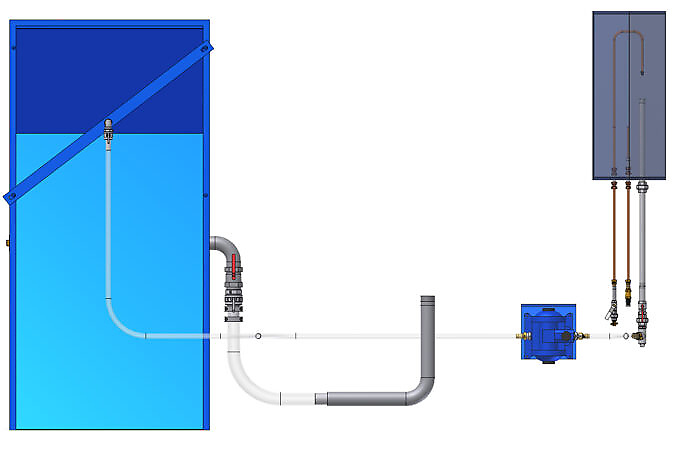
The abrasive supply system delivers abrasive, typically garnet, from the abrasive storage container to the cutting head at a controlled and consistent rate. The system can include an abrasive hopper or silo, metering system, hoses and fittings, and the connection to the cutting head. Its job is to ensure that the right amount of abrasive reaches the mixing chamber, where it is combined with the high-pressure water jet.

Abrasive is a critical part of abrasive waterjet cutting. The supply system therefore has a direct effect on cutting performance, reliability and operating cost. A good abrasive supply system provides:

– Consistent abrasive flow
– Reliable cutting performance
– Accurate abrasive dosing
– Reduced risk of blockages
– Efficient abrasive consumption
– Less operator intervention

An unstable or poorly adjusted abrasive supply can lead to variations in cut quality, reduced cutting speed, and unnecessary abrasive consumption. You use an abrasive supply system whenever you are abrasive waterjet cutting materials such as:

– Steel and stainless steel
– Aluminium
– Titanium
– Stone and ceramics
– Glass
– Composite materials

The system is especially valuable in production environments where the machine runs for long periods and consistent abrasive delivery is important.

For pure waterjet cutting, no abrasive supply system is required because the waterjet cuts without abrasive.
For production, the abrasive supply system is about consistency, efficiency, and uptime.

A stable supply means the cutting head receives the correct amount of abrasive throughout the job, helping maintain predictable cutting performance. Reliable abrasive supply → stable cutting process → consistent quality → predictable production

Because abrasive is also one of the major consumables in abrasive waterjet cutting, accurate metering can help control abrasive consumption and operating costs.
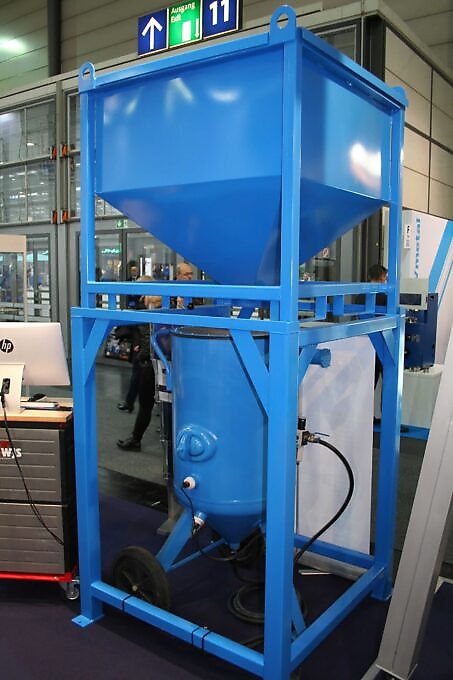
Abrasive Removal Systems

The abrasive removal system removes spent abrasive and cutting debris from the waterjet cutting table after the cutting process.

During abrasive waterjet cutting, garnet abrasive passes through the material and accumulates in the cutting tank. Depending on the machine design, the removal system may use a sludge removal system, abrasive conveyor, pump, suction system, or other automated method to transport the accumulated material away from the cutting area.

It helps prevent abrasive from building up in the tank and reduces the need for manual cleaning and maintenance.
An abrasive removal system is particularly useful when:

– The machine is used for regular or high-volume abrasive waterjet cutting
– Large amounts of garnet accumulate in the tank
– Manual tank cleaning would cause significant downtime
– The machine has a large cutting area or deep cutting tank
– Continuous or unattended production is important

For occasional or low-volume cutting, manual removal may be sufficient.

The abrasive removal system primarily affects uptime, maintenance, and operator workload.

By removing spent abrasive before it becomes a major problem, it can reduce the need for manual tank cleaning and help keep the machine ready for production. Efficient abrasive removal → less manual cleaning → less downtime → higher machine availability For high-production waterjet operations, abrasive removal can therefore be an important part of the overall machine automation and lifecycle-cost strategy.

Taper angle

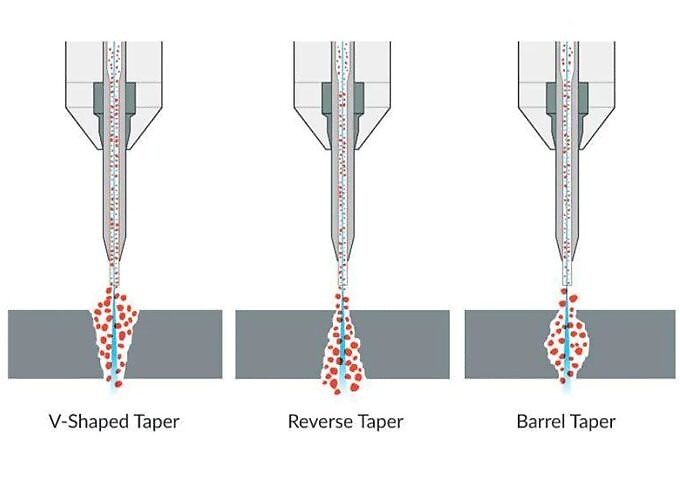
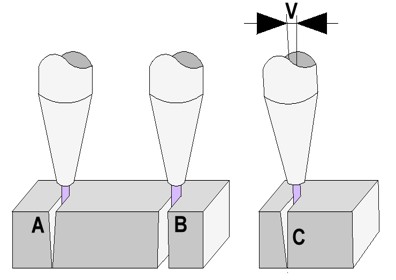
The taper angle is the difference in cut angle between the top and bottom of a part when cutting with a conventional waterjet. The kerf is typically slightly wider at the top than at the bottom, creating a tapered cut.

Taper affects part accuracy, fit, and edge quality. A larger taper can make finished parts less accurate, particularly when tight tolerances or precise assembly are required.

Taper is a natural characteristic of conventional waterjet cutting. When straight, accurate edges are important, a 3D or taper-compensating cutting head can be used to adjust the cutting angle during machining.

Controlling taper can improve dimensional accuracy and part fit, reducing the need for secondary machining.
Less taper → more accurate parts → better fit → less finishing work

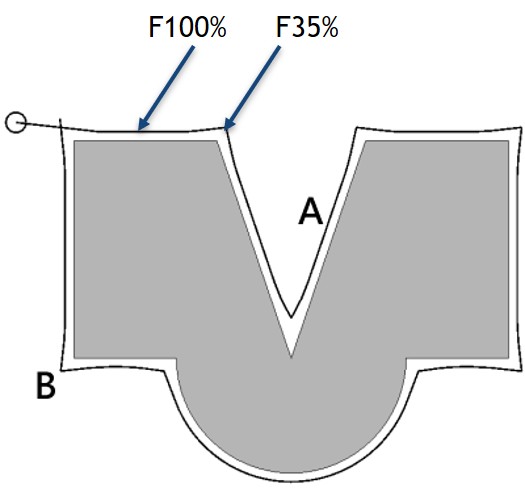
TAC

TAC (Taper Angle Compensation) is a waterjet cutting function that compensates for the natural taper created as the jet passes through the material.

It helps produce straighter, more accurate cut edges, improving dimensional accuracy and part fit.

TAC is useful when cutting parts where tight tolerances, accurate dimensions, or good fit-up are important.

TAC can improve part accuracy and consistency, reducing the need for secondary machining or manual finishing.
Taper compensation → straighter cuts → better accuracy → less finishing work

Lag compensation

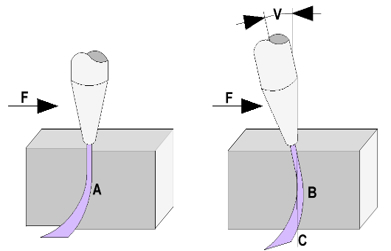
Lag compensation is a control function that adjusts the cutting path to compensate for the natural delay of the waterjet as it travels through the material.

Without compensation, the bottom of the jet can trail behind the programmed path, affecting part accuracy and corner quality.

Lag compensation helps produce more accurate parts and cleaner contours without necessarily having to reduce cutting speed.

Lag compensation → better accuracy → cleaner contours → more consistent production

VOC

VOC (Variable Offset Control) adjusts the cutting path to compensate for changes in the effective kerf width during cutting. Instead of using one fixed offset, the control can vary the offset according to the cutting conditions.

It helps maintain accurate part dimensions, particularly when cutting different shapes, materials, or thicknesses where cutting conditions change.

It is useful when high dimensional accuracy is required, especially for complex contours or varying cutting conditions.

Variable Offset Control can improve part accuracy and consistency, reducing the need for manual adjustments and secondary machining. Variable offset → better dimensional control → more consistent parts → less finishing work

Cutting Quality

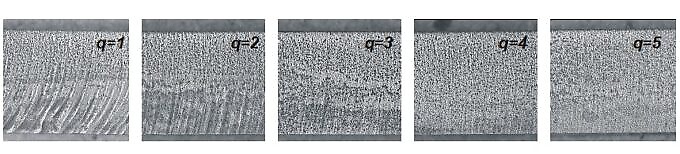
Waterjet cutting quality describes the finish and accuracy of the cut edge. It is commonly divided into five quality levels (Q1–Q5), from fast, rough cutting to slow, high-precision cutting.

The five quality levels allow you to choose the right balance between cutting speed, edge finish, accuracy and production cost.

– Q1: Fastest cutting, roughest edge
– Q2: Fast cutting with improved edge quality
– Q3: Good balance between speed and quality
– Q4: High-quality, accurate cutting
– Q5: Highest quality and precision, with the slowest cutting speed

Choose the quality level according to the application. Q1–Q2 can be suitable for rough cuts or parts where edge finish is less important, while Q4–Q5 are typically used for tight tolerances, precise fits and high-quality finished edges.

Selecting the appropriate quality level helps avoid over-processing while achieving the required result. Right quality level → right cutting speed → required accuracy → optimized production

Water Treatment

Water treatment prepares the water used by a waterjet cutting system by removing impurities and controlling water quality. Depending on the system, this can include filtration, softening, demineralization, or reverse osmosis.

Water quality has a direct impact on the high-pressure pump, orifice, and cutting head. Clean, properly treated water helps reduce wear, deposits, and unexpected maintenance.

Water treatment is especially important when the incoming water contains minerals, particles, or other impurities, or when the waterjet system requires a specific water quality.
Good water treatment helps improve component life, cutting consistency, and machine reliability, while reducing maintenance and operating interruptions.

Good water quality → less wear → higher reliability → more consistent production


Ball screw

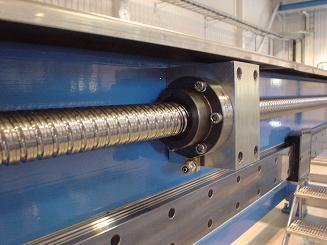
A ball screw is a precision mechanical component that converts the rotary motion of a motor into accurate linear movement of the waterjet cutting head or machine axis. Recirculating balls between the screw and nut provide smooth, low-friction motion.

The ball screw is important for positioning accuracy, repeatability, and smooth movement. Its condition directly affects how precisely the cutting head follows the programmed path.

Ball screws are commonly used on waterjet machine axes where high precision and repeatable positioning are required, particularly for demanding cutting applications.

A well-maintained ball screw helps deliver accurate parts, consistent motion, and reliable machine performance, while reducing the risk of backlash and positioning errors. Precise motion → accurate positioning → consistent cutting → reliable production

Linear Drive

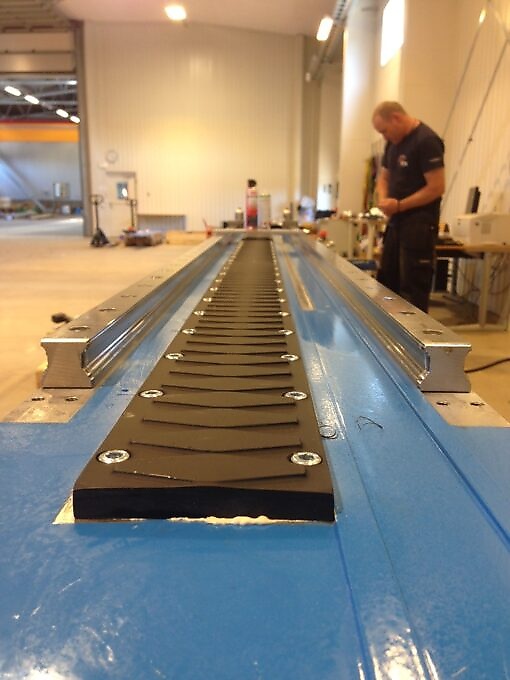
A linear drive moves the cutting head along the machine’s axes without using a conventional rotating screw. It converts electrical energy directly into precise linear motion.

Linear drives provide fast, smooth and highly dynamic movement, with excellent positioning accuracy and repeatability. They also have fewer mechanical transmission components subject to wear.

Linear drives are particularly useful for waterjet machines where high speed, acceleration and precise positioning are important, especially in demanding production applications.
A linear drive can enable faster movements, shorter cycle times, and precise cutting-head positioning, while reducing mechanical wear and maintenance. Direct linear motion → high dynamics → precise positioning → efficient production

Precision

Precision in waterjet cutting describes how accurately the machine can produce a part according to the programmed dimensions and geometry. It includes positioning accuracy, repeatability and control of the cutting process.

High precision means parts are produced closer to their intended dimensions, with consistent geometry and fit. This is especially important for tight tolerances and complex components.

Precision is important when cutting close-tolerance parts, detailed contours, precision components, or parts that must fit together accurately.

Higher precision can reduce scrap, rework, and secondary machining, while improving consistency from part to part.
High precision → accurate parts → consistent results → less rework