
Wood - Fabricated wood materials
Waterjet cutting is an effective method for processing fabricated wood materials such as veneer and plywood. This technique offers several benefits that make it especially suitable for these materials.
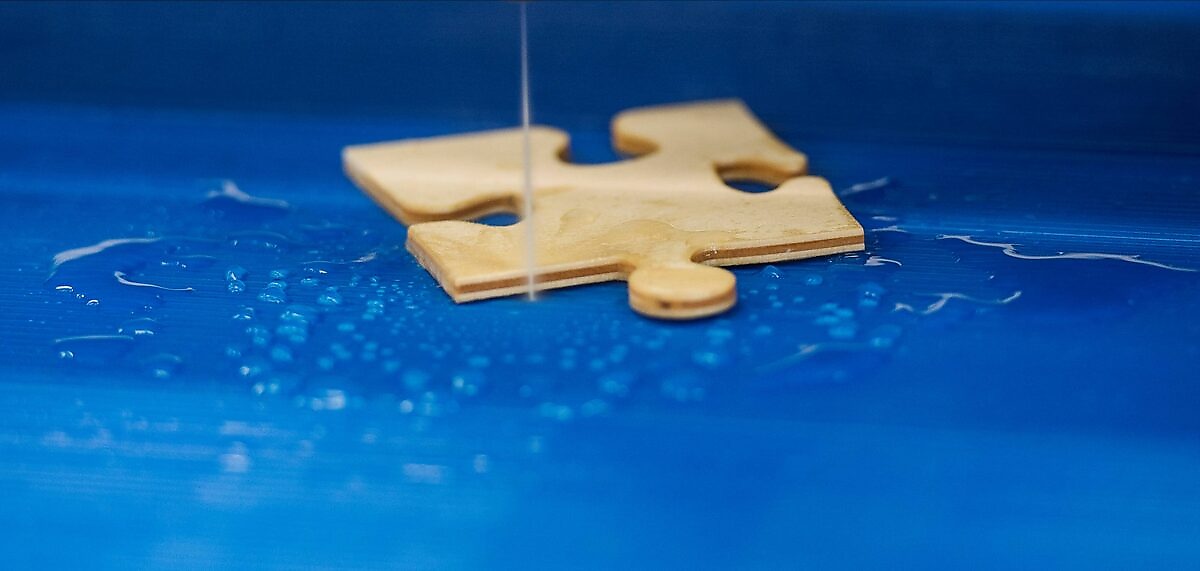
Waterjet cuts fabricated wood materials, e.g. veneer and plywood


Benefits of using waterjet cutting for fabricated wood products:
- Fast set-up time: Waterjet cutting enables short preparation times, increasing production efficiency.
- Narrow width of cut: The thin jet of water produces minimal kerfs, which results in meticulous precision and minimises material waste.
- No chipping: Unlike traditional cutting methods, waterjet cutting minimises the risk of chipping, which is particularly important when cutting thin materials like veneer.
- Free-form cutting: The technique allows complex and creative shapes to be cut easily, without the need for specialised tools.
Historically, waterjet cutting has been used to make products such as wooden jigsaw puzzles, table-tennis racquets and doll-house furniture, which demonstrates its versatility in wood-working.
Keywords explained
Fabricated wood materials
Fabricated wood materials are wood-based materials that have been manufactured, layered or bonded for specific properties. Examples include plywood, veneer, MDF, laminated wood and other engineered wood products.
Engineered wood
Engineered wood is a broader term for wood products made by combining wood fibres, veneers, particles or layers with adhesives or other processes. Waterjet cutting can be used for many engineered wood applications where precision and design flexibility are important.
Plywood
Plywood is made from thin layers of wood veneer bonded together. Because it is a layered material, cutting quality, edge control and reduced splintering are important when choosing a cutting method.
Veneer
Veneer is a thin layer of wood that is often used for furniture, panels, decorative surfaces and design applications. Waterjet cutting can be useful when veneer parts require detailed shapes, narrow cuts or repeatable dimensions.
MDF
MDF, medium-density fibreboard, is a manufactured wood material made from wood fibres. It is commonly used in furniture, interiors, panels and prototypes where consistent material properties and precise shapes are important.
Kerf
Kerf is the width of the cut made by the waterjet. In fabricated wood cutting, a narrow kerf can help improve part fit, reduce material waste and make it possible to create detailed contours or tight layouts.
Free-form cutting
Free-form cutting means cutting curved, irregular or complex shapes instead of only straight lines. This is useful for furniture design, decorative panels, prototypes and custom wood components.
Nesting
Nesting means placing several parts efficiently on the same sheet before cutting. Good nesting can reduce material waste and improve the use of plywood, veneer or MDF sheets.
No splintering
No splintering means that the cutting process helps reduce chipped or broken edges. This is especially important for layered wood materials, veneer and visible design components.
Cutting quality
Cutting quality describes the accuracy, edge finish and repeatability of the cut. In fabricated wood cutting, quality is affected by material type, thickness, density, water pressure, cutting speed and machine setup.
Specify your fabricated wood cutting needs
To recommend the right waterjet solution for fabricated wood materials, it is important to understand both the material and the production requirements. Fabricated wood materials can vary in structure, density, thickness, surface finish and moisture sensitivity, which means the cutting setup should be adapted to the specific application.
When contacting Water Jet Sweden, please share information about the material type, sheet size, thickness, part geometry, tolerance requirements and expected production volume. If you work with plywood, veneer, MDF or another engineered wood material, it is also useful to describe the layer structure, surface finish and any requirements for visible edges.
Drawings or CAD files can help define the required cutting paths, internal shapes, holes, curves and level of detail. It is also useful to describe your current production process and what you want to improve, such as reducing splintering, improving material utilization, cutting more complex shapes or increasing flexibility for prototypes and custom parts.
With the right information, Water Jet Sweden can help evaluate the most suitable machine configuration, cutting head setup, software workflow and production solution for your fabricated wood cutting needs.