
Glass and acrylic glass
Waterjet cutting is an advanced and flexible method for cutting both glass and acrylic glass (Plexiglas). Using a high-pressure water jet, sometimes combined with abrasive particles, allows complex shapes and details to be cut with a high level of precision and without exposing the material to heat.
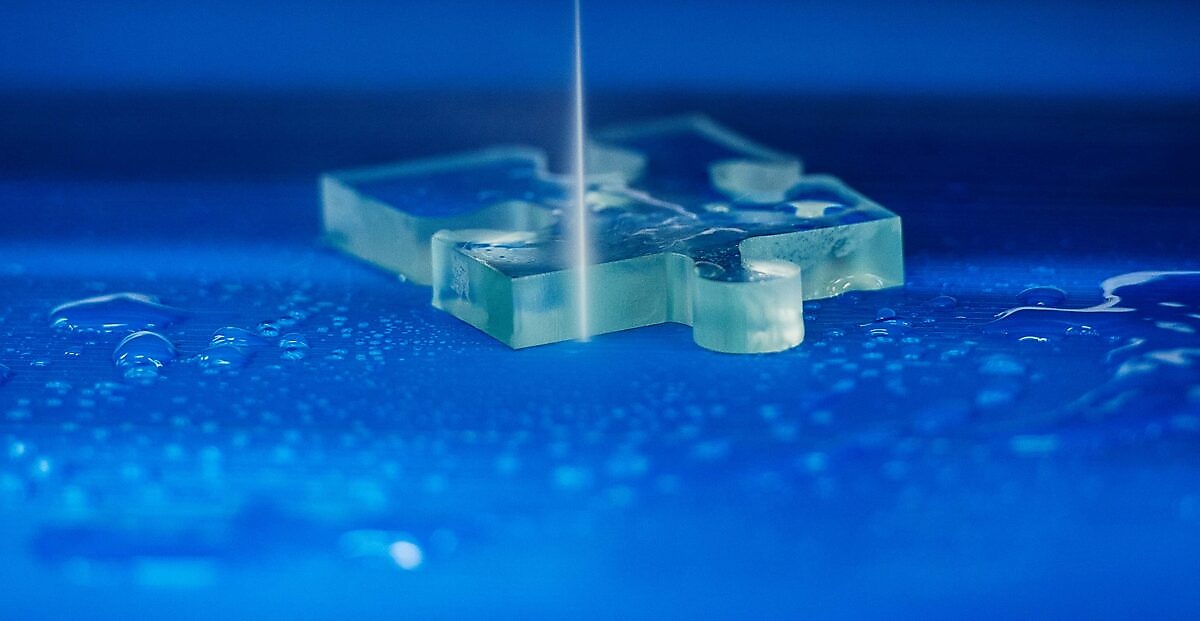
Cut any shape with waterjet technology


Benefits of using waterjet cutting for glass and acrylic glass:
- High level of precision and intricate detail: Waterjet cutting can create intricate patterns and shapes with exact tolerances, which is particularly valuable for design and architectural applications.
- No impact from heat: As the process is cold, thermal impacts that could cause cracking or deformation in the material are avoided. This is particularly important when processing brittle materials like glass.
- Flexibility in material thickness: This method is effective for cutting both thin and thick materials, making it suitable for a variety of applications.
- Environmentally friendly process: Waterjet cutting does not produce any harmful fumes or dust, making for a better working environment and reduced environmental impact.
Keywords explained
Waterjet cutting glass
Waterjet cutting glass is the process of cutting glass materials with an ultra high-pressure waterjet, often combined with abrasive. It is used when glass parts require precision, complex shapes, holes, curves or detailed contours.
Cutting glass
Cutting glass means shaping or separating glass into the required size, form or component. For simple straight cuts, traditional methods may be used, but for complex geometries, internal cut-outs and custom shapes, waterjet cutting can offer greater flexibility.
Waterjet cutting of glass
Waterjet cutting of glass refers specifically to using waterjet technology for glass processing. The method is useful for applications where controlled cutting, design flexibility and reduced thermal impact are important.
Glass cutting machine
A glass cutting machine is used to cut glass sheets, panels or components into specific shapes. A waterjet machine for glass can be suitable for industrial applications where complex contours, internal shapes and repeatable precision are required.
Abrasive waterjet cutting for glass
Abrasive waterjet cutting uses high-pressure water mixed with abrasive particles. Since glass is a hard and brittle material, abrasive is often used to help create a controlled cut through the material.
Float glass
Float glass is a common type of flat glass used in windows, panels, interiors and many technical applications. Waterjet cutting can be used for float glass when custom shapes, holes or detailed contours are required.
Laminated glass
Laminated glass consists of two or more glass layers bonded together with an interlayer. Cutting laminated glass requires careful process control because both the glass and the interlayer affect the final cut quality.
Mirror glass
Mirror glass is glass with a reflective coating on one side. When cutting mirror glass, the surface finish, coating and visible edge requirements should be considered before choosing the cutting setup.
Borosilicate glass
Borosilicate glass is a glass type known for its thermal and chemical resistance. It is often used in laboratory, technical and industrial applications where precision and material performance are important.
Technical glass
Technical glass refers to glass materials used in functional or industrial applications, such as instruments, panels, protective components or specialist equipment. These parts often require accurate dimensions and consistent cutting quality.
Brittle material cutting
Brittle material cutting means cutting materials that can crack, chip or fracture if they are not properly supported or processed. Glass is a brittle material, so machine setup, cutting parameters and work table support are important.
Internal cut-outs in glass
Internal cut-outs are holes or shapes cut inside the outer contour of a glass part. Waterjet cutting can be useful for internal cut-outs because it can follow digital cutting paths and create openings for fittings, installations or design details.
Glass edge quality
Glass edge quality describes the finish, accuracy and consistency of the cut edge. It is affected by glass type, thickness, abrasive flow, cutting speed, nozzle setup and material support. Visible glass edges may require additional finishing or polishing.
Glass cutting grid
A glass cutting grid is a work table support designed to help stabilize brittle glass materials during cutting. Proper support can reduce movement and help create a more controlled cutting process.
Tempered glass
Tempered glass is heat-treated glass designed to be stronger and safer than standard glass. It should normally be cut before tempering, because cutting tempered glass after the tempering process can cause it to shatter.
Specify your glass cutting needs
To recommend the right waterjet solution for glass cutting, it is important to understand both the material and the production requirements. Glass materials can vary in type, thickness, brittleness, surface finish and final application, which means the cutting setup should be adapted to the specific project.
When contacting Water Jet Sweden, please share information about the glass type, panel size, thickness, part geometry, tolerance requirements and expected production volume. It is also useful to describe whether the glass is float glass, laminated glass, mirror glass, glass tile, borosilicate glass, decorative glass, technical glass or another glass material.
If you already have drawings or CAD files, these can help define the cutting paths, holes, internal cut-outs, curves and level of detail. Please also include information about edge quality requirements, whether the cut edge will be visible, if post-processing is expected and whether the application is decorative, architectural, technical or industrial.
For brittle or high-value glass materials, test cutting can be useful before full-scale production. With the right information, Water Jet Sweden can help evaluate the most suitable machine configuration, cutting head setup, table support, software workflow and production solution for your glass cutting needs.