
Waterjet Cutting for Contract Manufacturers
Boost output with high-uptime systems engineered for rapid job transitions and multi-shift reliability. Lower your operating costs per part while delivering consistent quality on high-volume production runs.
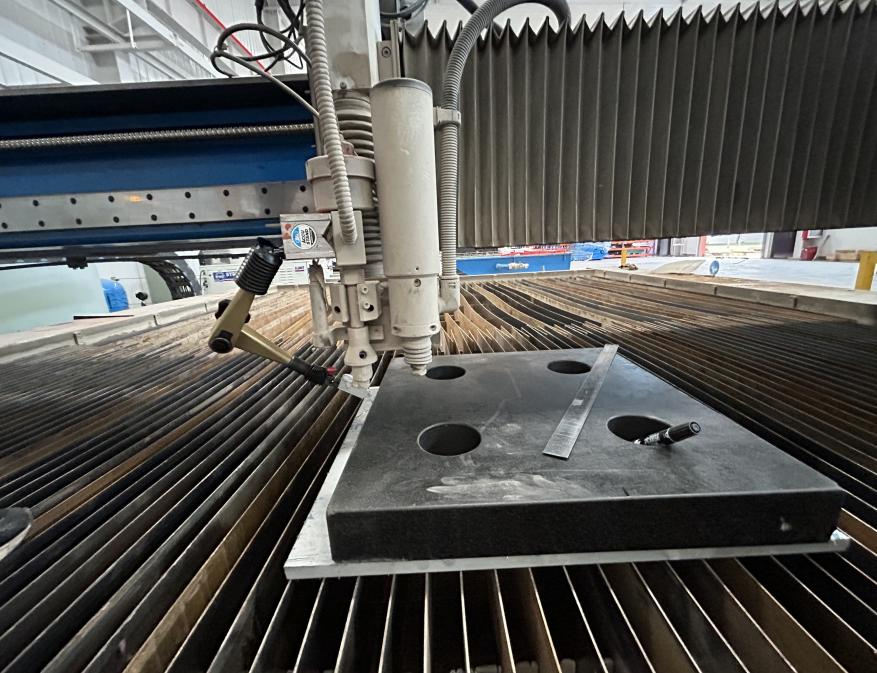
Expand Capacity, Cut Any Material, and Handle Every Customer Request
In contract manufacturing, success hinges on versatility, rapid execution, and overall delivery reliability. Your production floor must adapt quickly to constantly changing drawings, tight deadlines, unpredictable batch sizes, and diverse material requirements across multiple industries.
Relying exclusively on conventional cutting methods—such as CNC milling, turning, laser, or plasma—can create severe bottlenecks. Thermal distortion, reflective or non-conductive materials, thick plates, and long supplier lead times often force sub-contractors to decline lucrative customer orders.
Integrating high-precision waterjet cutting into your contract manufacturing workflow gives your workshop a versatile competitive advantage. Capable of processing virtually any material without thermal damage or specialized tooling, a single waterjet machine transforms how you handle custom manufacturing, prototype development, and high-volume outsourced production.
Why Contract Manufacturers Choose Waterjet Cutting
Sub-contractors and job shops face constant pressure to lower costs, shorten production cycles, and maintain strict quality standards. Waterjet cutting addresses these operational challenges directly by serving as an all-in-one primary cutting process.
- Unmatched Material Versatility: Process structural steel, stainless steel, aluminum, titanium, copper, brass, composites, glass, ceramics, plastics, rubber, and foam on a single machine.
- Eliminate Thermal Distortion: As a pure cold-cutting method, waterjet technology creates zero heat-affected zones (HAZ), preserving the mechanical properties of your materials without warping or structural hardening.
- Tool-Free Setup: Transition from one customer drawing to another instantly using digital DXF or CAD files without investing in or changing physical tooling.
- Streamline Downstream Workflows: Cut precise near-net shape blanks, intricate contours, slots, and internal cut-outs to reduce pre-machining time, tool wear, and scrap in downstream CNC milling, turning, welding, and bending operations.
Increase Cutting Capacity and Reduce Bottlenecks
Handling more customer orders requires maximizing machine utilization and throughput. Water Jet Sweden offers specialized configurations designed to scale up cutting capacity for growing contract manufacturers:
- Multiple Cutting Heads: Mount two or more cutting heads on a single gantry to produce identical customer parts simultaneously, doubling or tripling production output without increasing labor costs.
- Large Working Areas: Larger bed dimensions accommodate full-sized raw sheet stock and heavy plate materials, enabling extensive nesting options and reducing raw material prep.
- Dual Working Zones (Pendulum Cutting): Divide the cutting table into two distinct zones. While the machine cuts automatically in Zone A, operators safely load raw materials and unload finished parts in Zone B, achieving continuous operation and optimal machine utilization.
Reduce Lead Times and Boost Delivery Reliability
Dependence on external cutting suppliers creates uncertainty, lengthens lead times, and exposes your facility to third-party delays. Bringing waterjet cutting in-house brings production timelines back under your control.
- Immediate Turnaround: Import customer CAD files and begin cutting the moment an order arrives—ideal for urgent requests and fast customer turnarounds.
- Adaptable Design Changes: When customer specifications change mid-project, update digital cutting paths instantly without scrapping expensive tooling or losing days on setup.
- Eliminate Third-Party Delays: Internalizing your cutting process removes supplier queues, ensuring consistent on-time delivery for time-sensitive customer assignments.
Complete Cold-Cutting Capability Across All Materials
Contract manufacturers must process everything from dense armor plate to delicate foam gaskets. Water Jet Sweden machines utilize two primary processes to cover the full material spectrum:
Abrasive Waterjet Cutting
By introducing natural garnet abrasive into the high-pressure water stream, abrasive waterjet systems rapidly cut through dense and hard materials, including:
- Ferrous & Non-Ferrous Metals: Structural steel, stainless steel, tool steel, aluminum, titanium, copper, brass, and bronze.
- Hard Non-Metals & Advanced Materials: Carbon fiber, structural composites, glass, stone, ceramics, and dense laminates.
Pure Waterjet Cutting
Utilizing a fine, supersonic stream of pure high-pressure water, pure waterjet systems provide razor-sharp cuts at high speeds for soft, flexible materials:
- Rubber
- Foam
- Gaskets
- soft plastics
- Insulation
- Textiles
- Thin paper/cardboard products
Expand Your Service Offering and Win More Assignments
With an in-house waterjet system, contract manufacturers can accept jobs that competitors using only laser, plasma, or traditional machining must turn down.
Whether producing custom architectural brackets, thick industrial flange blanks, intricate composite automotive parts, or rubber seals, one waterjet machine enables your shop to serve aerospace, automotive, marine, energy, construction, and general engineering sectors simultaneously.
Suitable for Varied Orders: From Prototypes to High-Mix Runs
Managing short production runs alongside larger recurring orders can strain conventional workshop tooling and setup budgets. Waterjet cutting easily accommodates varying batch requirements:
- Prototype & One-Off Parts: Simple clamping and tool-free execution make early-stage design iterations, custom engineering parts, and test components fast and cost-effective.
- Short-Run Production: Process low-volume orders without amortizing expensive die or fixture costs across small part quantities.
- Recurring High-Volume Runs: Advanced CAD/CAM nesting software packs parts tightly on raw material plates, maximizing yield, minimizing waste on high-value alloys, and enabling repeatable high-mix production.
Preserving Material Properties with Cold-Cutting Technology
Thermal cutting methods (laser, plasma, oxy-fuel) alter material chemistry at the cut edge, creating heat-affected zones (HAZ) that hardens metals, warps thin sheets, and damages composite matrices.
Cold waterjet cutting generates no thermal stress. This eliminates the need for secondary stress-relieving, edge-grinding, or heat-treatment steps. Materials retain their structural integrity, grain structure, and temper from top to bottom—making the process mandatory for strict military, aerospace, and high-stress structural components.
Complementing Existing Manufacturing Workflows
Waterjet cutting does not replace your existing facility equipment; it enhances the productivity of your entire shop floor by streamlining how raw materials move through production.
The Waterjet Pre-Machining & Fabrication Process
Raw Material Stock: Load full-sized plates, sheets, or blocks of steel, alloys, composites, plastics, or glass onto the waterjet cutting table.
- Precision Cold Cutting: Rapidly cut out near-net shapes, outer profiles, holes, slots, and internal openings without thermal damage or material hardening.
- Downstream Operations: Transfer clean blanks directly to secondary operations like CNC milling, turning, drilling, press-brake bending, welding, or assembly.
Integration with Other Technologies
Pre-Machining Blanks: Rough out complex outer profiles and major internal cavities on the waterjet in minutes, leaving only minimal stock for precision CNC milling, turning, or reaming.
Fabrication Preparation includes producing clean edges ready for bending or welding without removing burnt oxide layers or heat-hardened crusts.
Configurable Edge Quality and Precision Control
Edge quality and cutting speed can be precisely adjusted based on customer tolerances, target application, and project budgets:
- Raw / Fast Separation Cut: High cutting speeds for basic blanks, rough stock removal, weld preparations, or secondary machining stock.
- Standard Industrial Cut: Optimal balance of speed and finish suitable for most structural brackets, machinery components, and general sub-contract work.
- Fine / Precision Cut: Slower cutting speeds producing smooth surface finishes and minimal edge taper, frequently eliminating the need for post-processing entirely.
Selecting the Right Waterjet Configuration for Your Needs
Water Jet Sweden builds configurable systems tailored to the specific capacity, footprint, and precision goals of contract manufacturers:
- Standard 2D Waterjet Cutting: Highly efficient flat-sheet and plate cutting for standard industrial components.
- Taper-Angle Control & Beveling: Automated cutting head tilting counteracts natural jet taper and produces precise bevel angles for weld preparation.
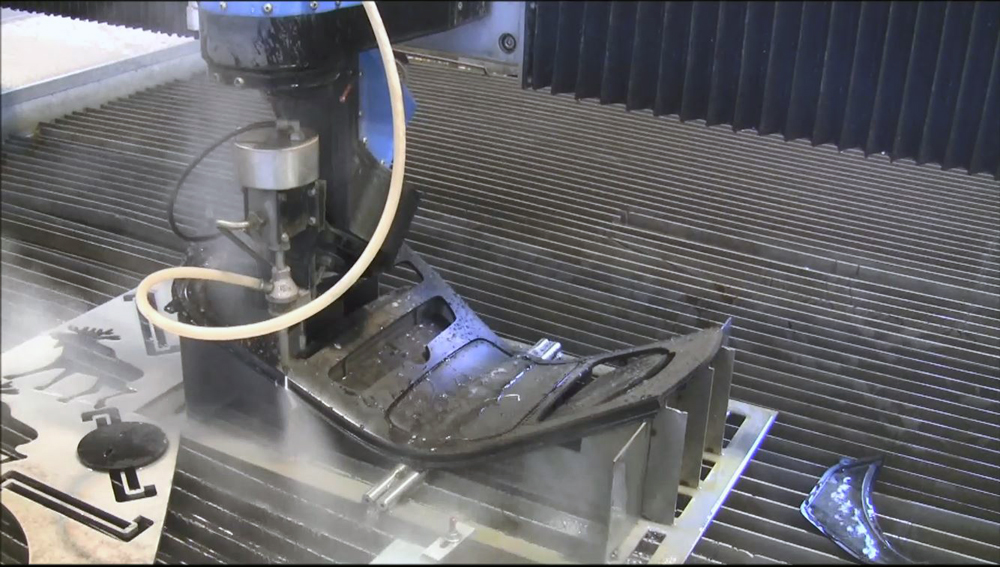
- 5-Axis Waterjet Cutting: Handles complex 3D contours, pre-formed parts, and multi-angle edge preparations.
- Micro Waterjet Cutting: Extreme precision systems utilizing narrow kerf widths and ultra-fine abrasive for miniature components, delicate electronics, and high-precision instruments.
Maximize Profitability and Lower Outsourced Costs
Investing in Water Jet Sweden hardware delivers measurable financial advantages to contract manufacturing businesses:
- Eliminate Vendor Markups: Retain profits internally rather than paying third-party cutting subcontractors.
- Minimize Raw Material Waste: Automated nesting algorithms pack parts tightly, reducing scrap on expensive stainless, titanium, and exotic alloys.
- Maximize Machine Uptime: Robust Swedish construction minimizes scheduled and unscheduled maintenance, ensuring consistent overall production economy.
- Capture High-Margin Jobs: Bid on complex, multi-material contracts that command higher profit margins.
Partnering with Water Jet Sweden
Choosing the right waterjet cutting system requires a partner who understands contract manufacturing workflows.
At Water Jet Sweden, we assist sub-contractors through test-cutting validation, custom machine engineering, software integration, comprehensive operator training, and lifetime operational support. Built with Swedish quality, our machines are supported by direct technical assistance, high-availability original spare parts, and dedicated field service to guarantee maximum uptime for your operation.