Cutting Heads

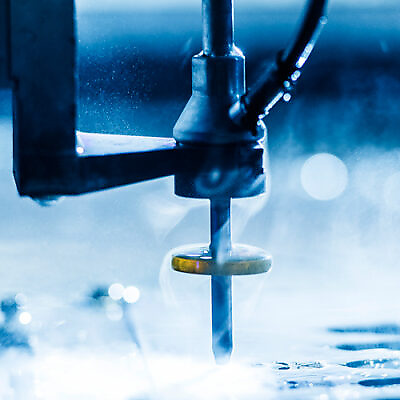
The cutting head is the heart and ultimate precision tool of every waterjet cutting system. It is where ultra-high-pressure water is focused into a concentrated jet and combined with abrasive media to shape raw materials into finished components. At Water Jet Sweden, we engineer cutting head solutions built for long service life, exceptional cutting-edge quality, and consistent day-to-day performance across every application.
Engineered for Every Material and Motion

Choosing the right waterjet cutting head directly impacts your production speed, cut width, tolerance level, and overall operating cost. Whether you are cutting soft rubber gaskets at high speeds or slicing through thick aerospace titanium with zero heat impact, our specialized head options deliver the precise water-and-abrasive mixture required for the job.

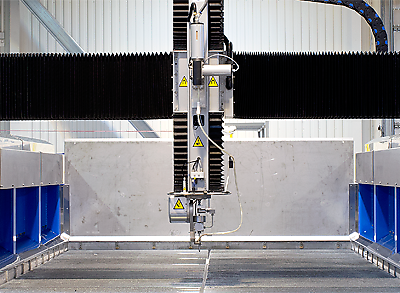
As a long-term technical partner, we offer cutting heads tailored to every operational setup—from fundamental 2D flatbed processing to advanced taper compensation, bevel cutting for weld preparation, and multi-axis 3D motion.

Our Cutting Head Technologies and Systems

To meet the broad range of materials processed by our customers, we provide specialized cutting head configurations designed for specific manufacturing needs:

1. Pure Waterjet Cutting Heads (PWJ)

Ideal for Soft Materials: Designed for high-speed cutting of soft materials such as foam, rubber, plastics, and insulation without using abrasives.

Ultra-Narrow Cuts: Produces extremely fine cut widths (down to 0.1 mm) with minimal material displacement, yielding zero thermal damage and extremely high production output.

2. Abrasive Waterjet Cutting Heads (AWJ)

Built for Hard and Thick Materials: Combines high-pressure water with finely graded natural abrasive sand (garnet) inside a specialized mixing chamber.

Versatile Industrial Performance: Effortlessly cuts steel, stainless steel, titanium, aluminum, glass, stone, and composite structures up to 300 mm thick, leaving a satin-smooth edge that minimizes the need for secondary deburring.

3. FAWJ Micro Cutting Heads (Fine Abrasive Water Jet)

Extreme Precision for Small Components: Engineered specifically for micro-machining and fine detail work.

Unmatched Tolerances: Operates with ultra-fine abrasive media to achieve extremely narrow kerfs and tight tolerances (down to ±0.01 mm), making it ideal for electronics, medical technology, and precision engineering.

4. Advanced Tooling & Multi-Head Systems

Taper Angle Control & Beveling: Specialized head articulation offsets the natural draft angle of the water stream to deliver perfectly perpendicular cut edges, chamfers, or weld preparation angles.

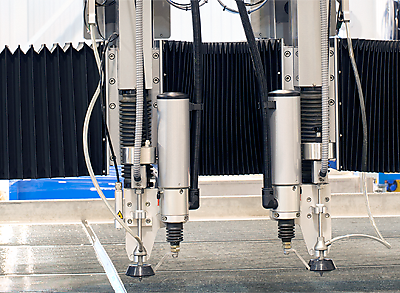
Multi-Head Waterjet Systems: To maximize production efficiency, our machine platforms support mounting multiple cutting heads on a single carriage or on independent Z-axes—allowing you to double or triple your parts output per cutting cycle.

Talk to Our Experts

Need advice on selecting or upgrading a cutting head setup for your production line? Contact our technical team today to discuss your material requirements, explore multi-head configurations, or arrange a test cut.

Frequently Asked Questions

What is a waterjet cutting head?

A waterjet cutting head is the part of the machine that focuses the high-pressure water jet and directs it into the material. Depending on the application, the cutting process can use pure water, abrasive waterjet cutting or fine abrasive waterjet cutting.

The right cutting head affects cutting width, precision, material compatibility, cutting speed and overall production performance.

What is the difference between a pure waterjet cutting head and an abrasive waterjet cutting head?

A pure waterjet cutting head uses only high-pressure water and is mainly used for soft materials, such as rubber, plastics, foam and similar materials. An abrasive waterjet cutting head adds abrasive material to the waterjet, making it suitable for hard materials such as metals, glass, stone, ceramics and composites.

The best choice depends on the material, required cut quality, cutting thickness and production needs.

When should I choose an abrasive waterjet cutting head?

An abrasive waterjet cutting head is the right choice when you need to cut hard or dense materials. It is commonly used for metals, stone, ceramics, glass and composite materials where pure water is not enough to create an efficient cut.

Abrasive waterjet cutting is a flexible solution for many industrial applications and can be optimized for different materials, thicknesses and cutting requirements.

When should I choose a pure waterjet cutting head?

A pure waterjet cutting head is recommended when cutting soft materials where abrasive is not needed. This can include foam, rubber, plastics, insulation and other soft or layered materials.

Because the process uses only water, it can create very narrow cuts and is often a good choice when high cutting speed, clean processing and minimal material waste are important.

What is a FAWJ Micro cutting head?

FAWJ stands for Fine Abrasive Water Jet. A FAWJ Micro cutting head is developed for high-precision cutting of very small and detailed parts in hard materials.

It is especially suitable for applications where narrow incisions, tight tolerances, and minimal material loss are important, such as precision engineering, electronics, medical technology, and advanced component manufacturing.

What is the difference between 2D cutting, taper angle control, bevel cutting and 3D cutting?

2D cutting is used for standard flat cutting in sheet materials. Taper angle control helps compensate for the natural taper that can occur during waterjet cutting, making it possible to achieve more perpendicular cuts.

Bevel cutting is used when angled cuts are needed, for example for chamfers or weld preparations. 3D cutting is used for more advanced parts where the cutting head needs to cut shapes in different planes or around complex geometries.

Can several cutting heads be used on the same waterjet machine?

Yes, several cutting heads can be used on the same waterjet machine, depending on the machine model, cutting process and production requirements. Multiple cutting heads can help increase productivity by allowing more than one part or cutting line to be processed at the same time.

The number of cutting heads should be selected based on material type, working zone, pump capacity, required precision and production volume.

How do I choose the right waterjet cutting head for my application?

To choose the right waterjet cutting head, you need to consider the material, thickness, required precision, cutting width, production volume and the type of cutting you need. Soft materials are often suitable for pure waterjet cutting, while hard materials usually require abrasive waterjet cutting.

For advanced applications such as narrow incisions, micro parts, bevel cutting or 3D shapes, a specialized cutting head or cutting tool may be the best solution.