
Composite materials
Waterjet cutting is an effective method for cutting a range of composite materials, such as carbon fibre-reinforced plastics, fibreglass and Kevlar. The high-speed jet of water used in abrasive waterjet cutting can cut through almost any material, making the technique particularly useful for complex and detailed shapes. It has a low contact force which eliminates the need for bulky tools and minimises the risk of delamination or damage to the material.
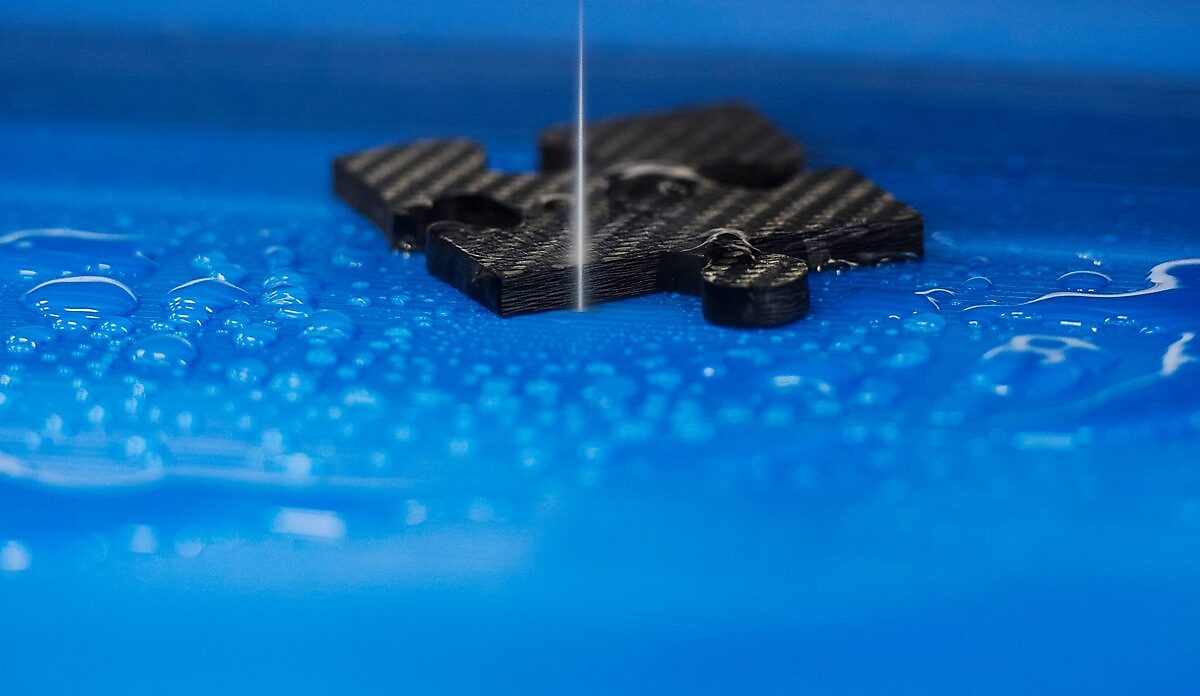
Carbon fiber or glass fiber reinforced materials CRP, CFRP, GRP, GFRP and C/C


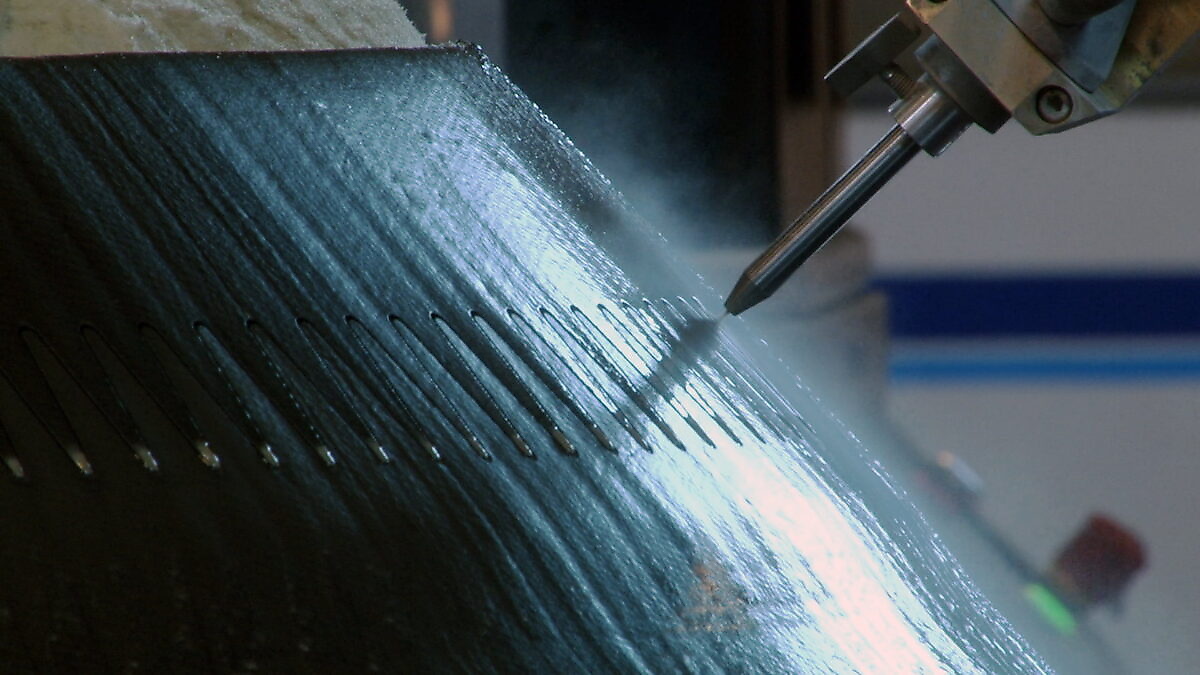
One of the main advantages of waterjet cutting is that it is a cold method. This means that the material is not exposed to heat, which can change its properties or cause melting and deformation. This is particularly important when processing composites, where heat can lead to undesirable changes in the structure of the material.
Waterjet cutting is also versatile and can be used for composites made up of different materials, such as metal and rubber, in one single process. The fine, concentrated water jet cuts reliably and precisely in all directions with meticulous accuracy. This is what makes the technique ideal for applications where precision and quality are crucial.
Keywords explained
Waterjet cutting composites
Waterjet cutting composites means cutting reinforced, layered or hybrid materials with a focused ultra high-pressure waterjet. It is often used when the material requires precision, low heat impact and reduced risk of edge damage.
Composite materials
Composite materials are made by combining two or more materials to achieve specific properties, such as low weight, high strength, stiffness or resistance to wear. Common examples include carbon fiber composites, fiberglass composites and aramid fiber composites.
CFRP
CFRP stands for carbon fiber reinforced plastic. It is a lightweight and strong composite material often used in aerospace, automotive, motorsport and advanced industrial applications.
GFRP
GFRP stands for glass fiber reinforced plastic. It is a composite material made with glass fibers and polymer resin, often used in industrial parts, panels, marine applications and structural components.
Kevlar composites
Kevlar composites are reinforced with aramid fibers. They are used in applications where strength, low weight and impact resistance are important.
Delamination
Delamination means that layers in a composite material separate from each other. In composite cutting, reducing the risk of delamination is important for maintaining strength, edge quality and part performance.
Fibre pull-out
Fibre pull-out occurs when fibres are pulled from the composite edge during cutting. A controlled cutting process can help reduce fibre damage and support cleaner edges.
Hybrid composites
Hybrid composites combine different materials or fibre types in one structure. Examples can include combinations of carbon fiber, glass fiber, rubber, metal or other reinforcement materials.
Laminate structure
Laminate structure describes how the layers in a composite material are built up. Fibre direction, layer thickness and resin type can all affect how the material behaves during cutting.
Composite trimming
Composite trimming means cutting or finishing the edges of a molded or formed composite part. Waterjet cutting can be useful for trimming complex composite parts with repeatable accuracy.
Specify your composite cutting needs
To recommend the right waterjet solution for composite cutting, it is important to understand both the material structure and the production requirements. Composite materials can vary in fibre type, laminate structure, thickness, resin system, surface finish and sensitivity to delamination, which means the cutting setup should be adapted to the specific application.
When contacting Water Jet Sweden, please share information about the composite material type, sheet or part size, thickness, fibre reinforcement, laminate structure, tolerance requirements and expected production volume. If the material is CFRP, GFRP, Kevlar, fiberglass, a sandwich panel or a hybrid composite, this information is important for evaluating the right process.
Drawings or CAD files can help define cutting paths, holes, internal cut-outs, curves and the required level of detail. It is also useful to describe whether the component is flat, molded, curved or three-dimensional, since complex geometries may require a more advanced machine setup or 5-axis cutting.
Please also include information about edge quality requirements, visible surfaces, post-processing needs and current production challenges. This could include reducing delamination, improving repeatability, cutting complex shapes, reducing dust or moving from manual trimming to a more controlled digital cutting process.
With the right information, Water Jet Sweden can help evaluate the most suitable machine configuration, cutting head setup, software workflow, abrasive process and production solution for your composite cutting needs.