Metals – Other non-ferrous metals

Waterjet cutting is an efficient and precise method for cutting non-ferrous metals, including copper, titanium and brass. The cold abrasive technique preserves the original properties of the materials and is particularly well-suited for cutting metals that are sensitive to heat or for which there are specific requirements for surface quality.
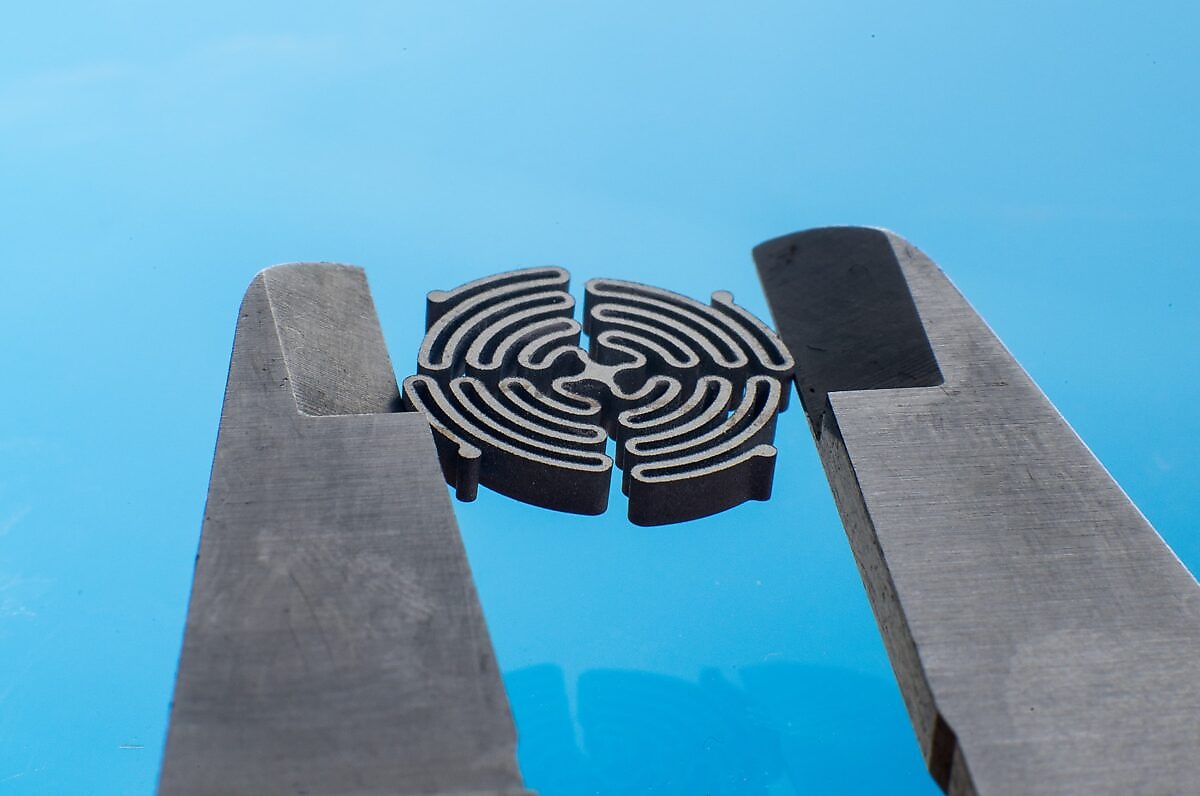
The cold, brittle cutting method is ideal

Benefits of using waterjet cutting for non-ferrous metals:

  • Preserved material structure: The cold cutting process prevents thermal impact, ensuring that the metallurgical properties of the metal remain unchanged.
  • No heat-affected zone: Unlike thermal cutting methods, waterjet cutting eliminates the risk of heat-related deformations or changes in the material.
  • Environmentally friendly process: Waterjet cutting does not generate smoke or harmful vapours, making for a cleaner working environment and reduced environmental impact.
  • Versatility: The method can be used to cut through a wide variety of alloys and metals, which makes it flexible for different applications.

Choosing waterjet cutting for non-ferrous metals ensures a high level of precision and quality, while preserving the integrity of the material.

Areas of application

Mechanical and civil engineering

Manufacturing of precision components and assembled parts where meticulous accuracy is required.

Precision engineering

Production of detailed parts for watches, jewellery and appliance components where intricate processing is essential.

Materials research

Manufacturing material samples without the occurrence of structural changes, which is important when analysing alloys that are new or difficult to process.

FAQ

What non-ferrous metals can be cut with waterjet technology?

Waterjet cutting can be used for many non-ferrous metals, including copper, titanium, brass, bronze, nickel alloys, zinc, tin and other special alloys. Aluminium is also a non-ferrous metal, but is often handled separately because it is widely used in many industrial applications.

The right cutting setup depends on the specific material, thickness, hardness, surface requirements and expected production volume.

Why is waterjet cutting suitable for copper, titanium, brass and bronze?

Waterjet cutting is suitable for copper, titanium, brass and bronze because it cuts without heat. This helps preserve the material structure and reduces the risk of thermal distortion, discoloration or heat-related changes along the cut edge.

The process is also flexible and digitally controlled, making it useful for complex shapes, prototypes, custom parts and precision components in different non-ferrous metals.

How does waterjet cutting help preserve the properties of non-ferrous metals?

Waterjet cutting is a cold cutting process, which means the material is not exposed to the same heat impact as with thermal cutting methods. This helps preserve the original properties of the metal, including strength, surface quality and dimensional stability.

This is especially important for materials such as titanium, copper alloys and other high-value metals where heat can affect performance, appearance or the final application.

Why is cold cutting important for non-ferrous metals?

Cold cutting is important because many non-ferrous metals can be sensitive to heat, deformation or surface changes. Heat-based cutting methods may create heat-affected zones, discoloration, warping or changes in material properties.

With waterjet cutting, the material is cut without thermal stress. This makes the process suitable for applications where precision, material integrity and clean cut edges are important.

Can waterjet cutting be used for copper and copper alloys?

Yes, waterjet cutting can be used for copper and copper alloys such as brass and bronze. Since copper conducts heat very efficiently, cold cutting can be an advantage when heat-related deformation or surface effects should be avoided.

Waterjet cutting can be used for copper components, brass details, bronze parts, electrical applications, decorative parts and precision blanks.

Can waterjet cutting be used for titanium and high-performance alloys?

Yes, waterjet cutting can be used for titanium and other high-performance non-ferrous alloys. Titanium can be sensitive to heat during processing, which makes cold abrasive waterjet cutting a useful method when material properties need to be maintained.

The process is often relevant for demanding applications in aerospace, energy, precision engineering, research and advanced manufacturing.

Is waterjet cutting suitable for brass, bronze and decorative metal parts?

Yes, waterjet cutting can be suitable for brass, bronze and decorative metal parts. The process can create detailed contours, internal cut-outs, holes and complex shapes without thermal discoloration along the cut edge.

This makes it useful for design components, architectural details, signage, interior elements, fittings, prototypes and custom metal parts.

How does waterjet cutting compare with laser or mechanical cutting for non-ferrous metals?

aser and mechanical cutting can be effective in many applications, but they may create challenges depending on the material. Thermal cutting methods use heat, which can affect metals such as copper, titanium and brass. Mechanical cutting can create tool wear, force on the material or limitations in shape complexity.

Waterjet cutting is different because it uses a cold, digitally controlled cutting process. It can cut a wide range of non-ferrous metals without heat-affected zones and with high flexibility for complex geometries.

What affects edge quality when cutting non-ferrous metals?

Edge quality is affected by the material type, thickness, hardness, cutting speed, abrasive flow, water pressure, nozzle setup and machine accuracy. Softer, harder or more ductile metals may require different process settings to achieve the desired result.

For parts with visible edges, tight tolerances or limited post-processing, edge quality requirements should be defined before production. Test cutting can also be useful for special alloys or high-value materials.

What information should I provide for a non-ferrous metal cutting application?

To evaluate a non-ferrous metal cutting application, it is helpful to provide the material type, alloy, sheet or plate size, thickness, part geometry, tolerance requirements, edge quality expectations and production volume.

It is also useful to share CAD files or drawings, information about holes, internal cut-outs, bevels, surface requirements and whether the application involves prototypes, recurring production, precision parts or high-value materials.