
Metals - Ferrous Metals
Abrasive waterjet cutting is a versatile and effective method for cutting ferrous metals, including stainless steel, tool steel and various steel alloys. Whether you need to cut 10 mm thick stainless steel or a 100 mm thick titanium alloy, waterjet cutting offers a high level of precision and flexibility for a range of materials and thicknesses.
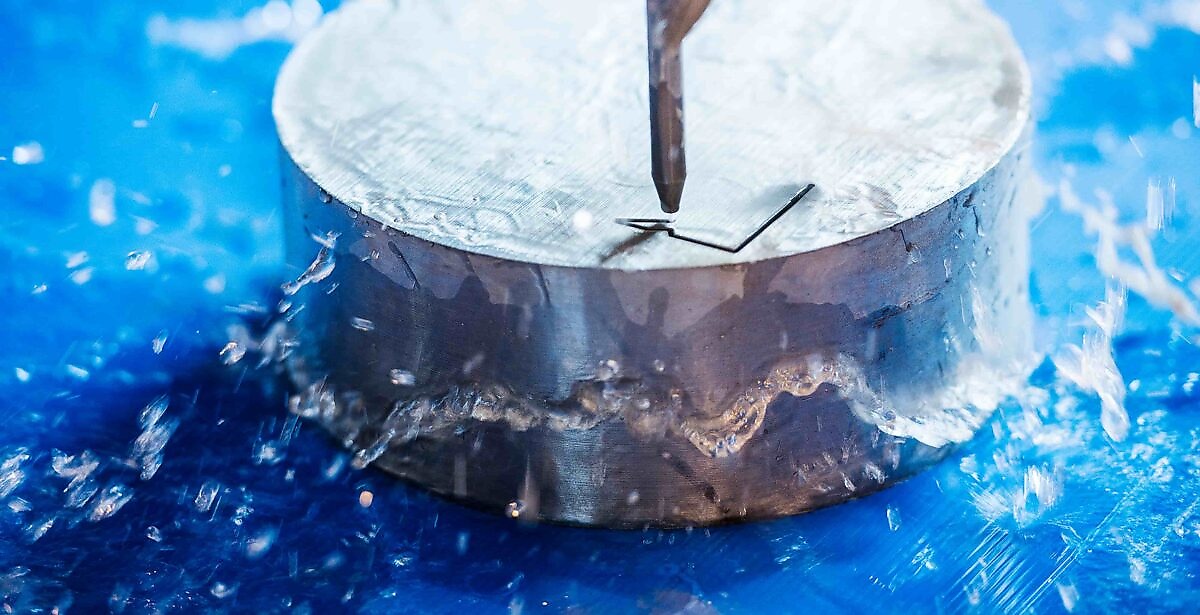
Abrasive waterjets are ideally suited for tough metal cutting
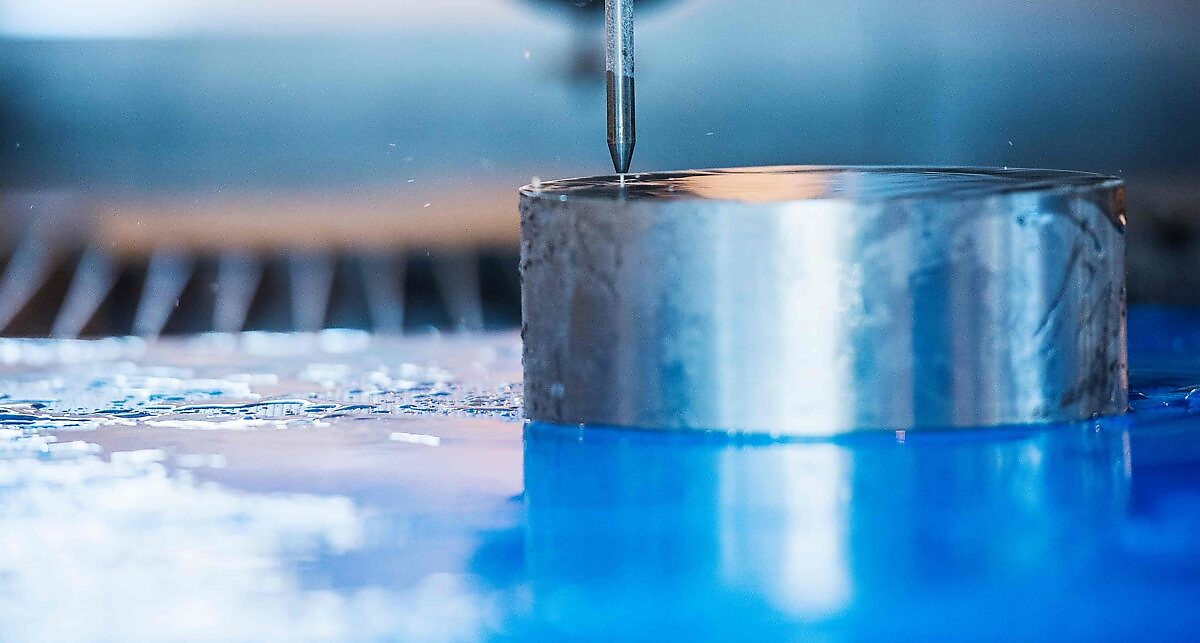


Benefits of using waterjet cutting for metals:
- No heat-affected zone: Waterjet cutting is a cold method that eliminates the risk of thermal impact, thus preserving the original properties of the material without it hardening or deforming at the face of the cut.
- Versatility: Ability to cut through all types of alloys, including high-resistance and heat-sensitive materials, without compromising quality.
- High level of precision: The narrow kerf allows intricate and complex shapes to be cut with minimal material loss, which is particularly beneficial for advanced design requirements.
- Environmentally friendly process: As no smoke or harmful vapours are emitted during the process, waterjet cutting makes for a cleaner and safer working environment.
- Reduced need for fixtures: The low lateral and vertical forces during cutting minimise the need for extensive clamping, which simplifies set-up and saves time.
- Processing of thick materials: Waterjet cutting can cut thicker materials than laser technology and offers more precise cutting compared to plasma or flame-cutting processes.
Choosing abrasive waterjet cutting for ferrous metals ensures efficient, precise and environmentally friendly production that meets high standards of quality.
Ferrous metals commonly processed using waterjet cutting:
- Cast iron
- Wrought iron
- Stainless steel
- Tool steel
- Alloy steels such as Hastelloy, Hardox, Inconel, Monel and Duplex steels
Keywords explained
Ferrous metals
Ferrous metals are metals that contain iron. Common examples include steel, carbon steel, stainless steel, cast iron, tool steel and many steel alloys.
Waterjet cutting ferrous metals
Waterjet cutting ferrous metals means cutting iron-based metals with high-pressure water and abrasive. The process is useful when precision, low heat impact and flexibility are important.
Steel waterjet cutting
Steel waterjet cutting is the process of cutting steel sheets, plates or components with abrasive waterjet technology. It can be used for both simple blanks and more complex steel geometries.
Carbon steel
Carbon steel is an iron-based material where carbon is the main alloying element. It is widely used in structural parts, machine components, plates and industrial applications.
Stainless steel
Stainless steel is a ferrous metal with chromium content that improves corrosion resistance. Waterjet cutting can be useful when stainless steel needs to be cut without thermal discoloration or heat-affected zones.
Tool steel
Tool steel is a hard and wear-resistant steel often used for tools, dies, machine parts and demanding industrial components. Abrasive waterjet cutting can be useful when the material is difficult to process with other methods.
Hardened steel
Hardened steel has been heat-treated to improve hardness and wear resistance. Since waterjet cutting is a cold process, it can cut hardened steel without adding new heat to the material.
Cast iron
Cast iron is an iron-based material with high carbon content. It is commonly used for heavy-duty components, machine bases, housings and industrial parts.
Wear-resistant steel
Wear-resistant steel is designed to withstand abrasion and mechanical wear. It is often used in heavy industry, mining, transport and machinery applications where durability is important.
Heat-affected zone in steel
A heat-affected zone is the area of steel affected by heat during thermal cutting. Waterjet cutting does not create a heat-affected zone, which helps preserve the original material properties.
Thermal hardening
Thermal hardening can occur when heat from a cutting process changes the structure or hardness of the material along the cut edge. Cold waterjet cutting helps avoid this type of heat-related edge effect.
Steel plate cutting
Steel plate cutting means cutting flat steel plates into parts, blanks or components. Waterjet cutting can be suitable when thick plates, tight tolerances or low heat impact are important.
Bevel cutting steel
Bevel cutting steel means cutting an angled edge instead of a straight vertical edge. This can be useful for weld preparation, chamfers and parts that require angled geometry.
Abrasive flow
Abrasive flow describes how much abrasive is added to the waterjet stream. For ferrous metals, abrasive flow affects cutting speed, edge quality and the ability to cut harder or thicker materials.
Edge quality in steel cutting
Edge quality describes the finish, accuracy and consistency of the cut edge. In ferrous metal cutting, it is affected by steel grade, thickness, hardness, cutting speed, abrasive flow, water pressure and machine setup.